
The eyes are not just machines to help us to see, but spiritual scavengers for our souls. They are constantly moving to glean information. Aside from identifying things in their visual path, they are always looking for the geometric patterns that make up the blueprints of nature. When found, there is a jolt of Energy. I often think of the movements of the eyes as a dance, especially when they are delighted by natural patterns. In Let the Eyes Have a Pleasurable Dance, Lesson VII, Part A, we will begin to explore how our decorating can set the stage to please the eye and bring Energy into our environment.
The Rules of Design for Energy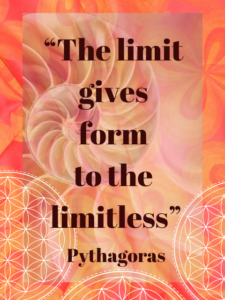

In the 1700’s the rules of design changed as rationalism totally wa s replaced by empiricism, and with that change, we started to lose the ability to design for Energy. You have heard the saying “Beauty is in the eye of the beholder.” This was a maxim to support the philosophy of the empiricist David Hume who believed that “Beauty in things exists merely in the mind which contemplates them.” This meant that everyone could decide what beauty is. This meant that there were no rules.
The ancients Greek rationalist philosopher, Plato believed just the opposite, that is that good design had rules and could not be made up by man. Those rules were based on the geometry found in nature. (We will examine his philosophy more fully in, Towards a Philosophy of Decorating, Lesson IX, Part A
The good news is that even though there are rules, there are an infinite amount of ways to express them. We just have to be careful not to step outside of the boundaries. By limiting ourselves to a set of decorating rules, we open up the power of energetic creating. The epigram attributed to Pythagoras that the “limit gives form to the limitless” sums it up. Allow yourself to be limited by the rules and you will be rewarded by the power of Energy.
The golden proportion is the most used geometric blueprint found in nature. Its infinite permutations of patterns is a good decorating tool but it is difficult to employ. At some later date I will explore those possibilities but for now I want to introduce a simpler scaffolding which is considered the highest pattern of sacred geometry. In your environments, I want you to get your eye to move in a circular path.
Circling the Square
We live and work in square or rectangular environments but our inner selves are more circular in nature. Aniela Jaffre, who wrote Part Four of Jung’s Man and His Symbols, said, “The circle is a symbol of the psyche (even Plato described the psyche as a sphere). The square (and often the rectangle) is a symbol of earthbound matter, of the body and reality.” In sacred geometry, the square is a symbol for the earth. The circle is the symbol for the heavens. So with all these squares and rectangles around us, getting the eye to move in a circular manner can only help to gives us more of a sense of the cosmos and thus the Energy of creation.
You might have heard the phrase, ‘squaring the circle.” It refers to attempts to construct a square with the area of a given circle using only a compass and a straight edge. Medieval intellectualists had no video games. To pass a Sunday afternoon after church services, they played mathematical puzzles.
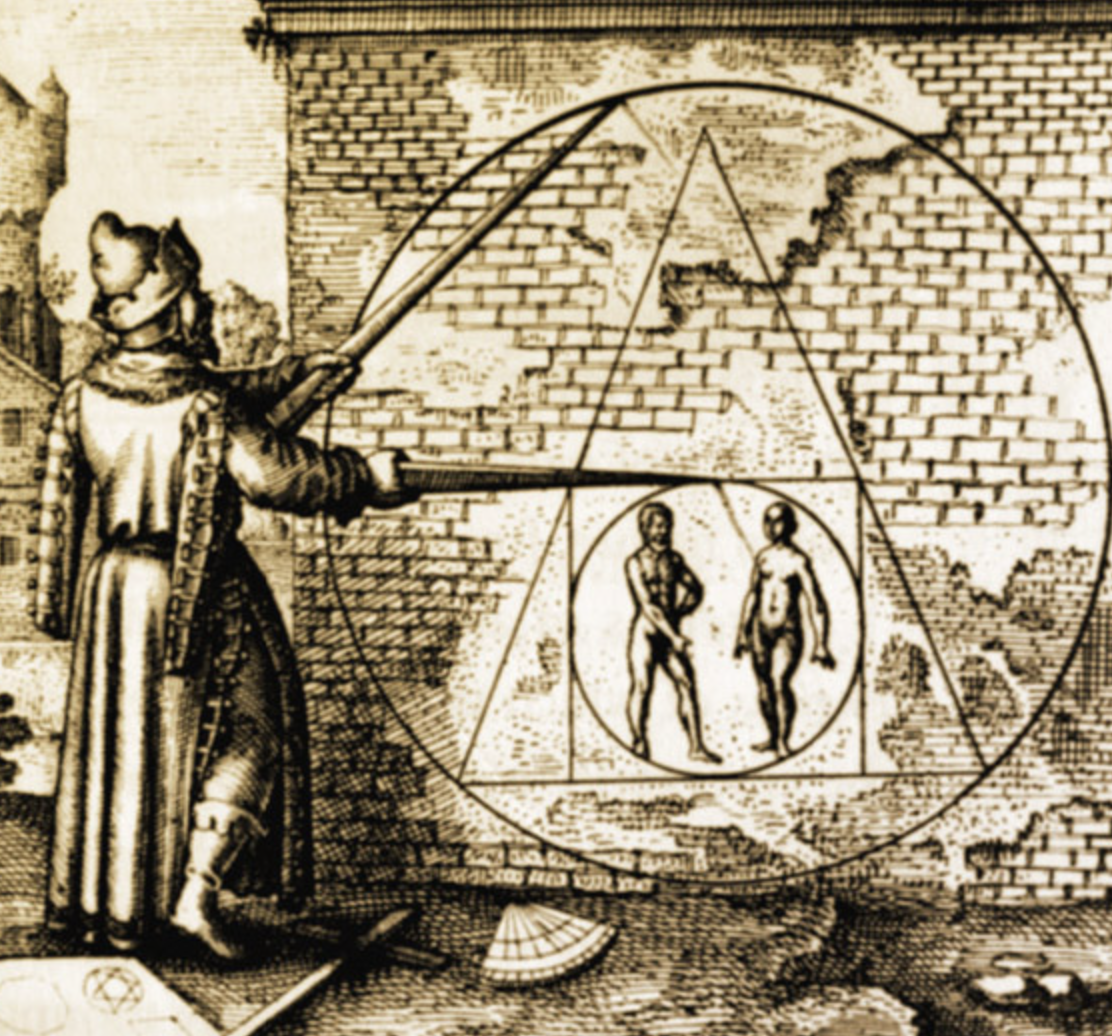
“Squaring the circle” was one of them. Attempts to do so resulted in nothing and in 1882, it was proven that this was not possible to do. Today “squaring a circle” is a metaphor for trying to do the impossible.
My term “circling the square” is not a mathematical puzzle but a way to get the eyes to move in a circular manner in an environment filled with 90 degree corners and angles. I have several methods for doing this. Used alone or in combination, these methods bring a great deal of calm and Energy to the environment.
Searching for Like Thinking
In the thirty-five years of actively putting all my theories together, I searched for ideas similar to my thinking. Part of the search was my need to calm my own insecurities about writing about such unusual ideas.
Along the way, I found the writings of the very talented interior designer, Vicki Posey of The Legacy Design Group. Aside from her work as an interior designer and CEO of a large interior design company, she wrote a monthly blog on her website to teach design concepts.
In one of her blogs, she wrote: “I have often said that the successful room is one where, upon entry, one’s eye sweeps the room and comes to rest. That if the eye does not “come to rest, the design is not successful. The principles and elements of design have not been successfully incorporated and the room will not function as well as it should and one will have a sense of “dis”ease when present.”
I thought to myself that “sweeping the room and coming to rest” is the essence of circling the square except that her idea had the eye stopping as a sign of success.
I asked her where she got that concept. Since she taught interior design early in her career, she thought that it was part of some text of interior design. I told her that I never saw this concept in print. Upon some research, she wrote back:
“In reviewing my textbooks, I believe you are correct – I do not find my statement in print – I would have to agree that it is something that came to me instinctively – although I hadn’t really thought much about it. I can’t remember when I started using the phrase, only that it has been a part of my teaching and philosophy for many (many!) years.”
My Methods of Bringing Circular Eye Movements in Decorating
Like Vicki Posey, sometimes design techniques come from deep inside of us. They are not taught in textbooks but are intuitive. They are proven in the laboratory of ones own personal experience. Please find my intuitive methods of bringing Energy to your environments through the use of circular geometry and eye movements:
1. Circling the Square by Using the Old Professor’s Theorem
2. Circling the Square by Using the Old Professor’s Theorem in Three Dimensions
3. Circling the Square by Cutting Off Angles
4. Using the Gestalt Laws of Perception
One: Circling the Square by Using the Old Professor’s Theorem
In Finding Energy Through Geometric Patterns, Lesson III, I wrote about the Old Professors Theorem for creating a scaffolding on a canvas.
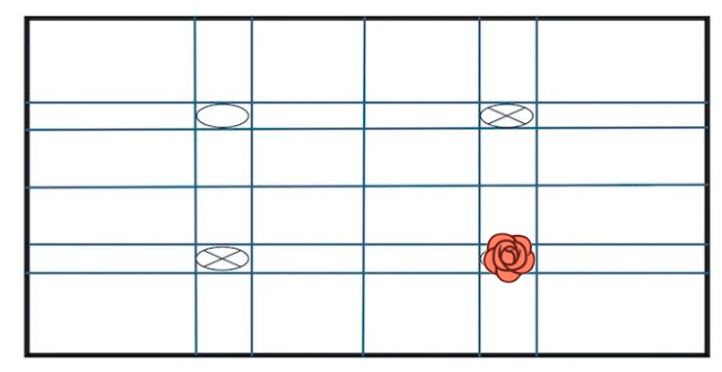
Of the four quadrants, one must be dominant, two must be subdominant and one submissive or empty. This made the eye travel in a circle or ellipse. The absence of detail in one of the quadrants is key to the movement.
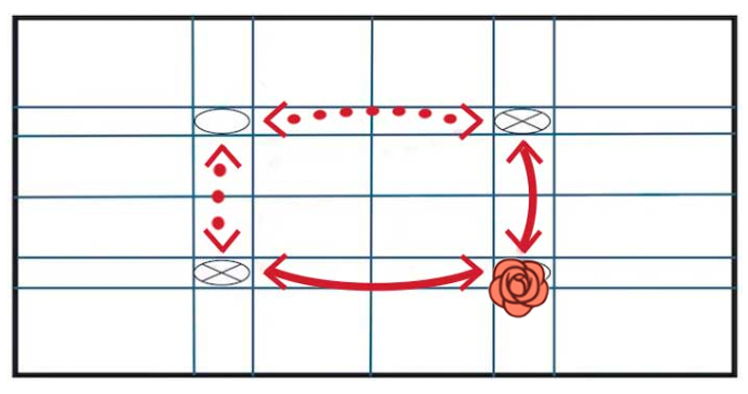
The key to this eye movement was a dominant object or focal point and the brain’s need to close a geometric form. The Law of Closure is incredibly powerful. In fact, most business logos significantly utilize ths law. As an aside, a good rule of thumb in decorating for Energy is to observe how corporate America uses this law. (See Law of Closure in The Gestalt Laws of Perception, Lesson V.)
If one were to put equally detailed objects in all four quadrants the eye could be jumping all around. This kind of eye stress is often called visual noise and is the opposite of visual harmony.
I sometimes use this theorem to arrange objects on one wall like the bookcase in Finding Energy Through Geometric Patterns, Lesson III.
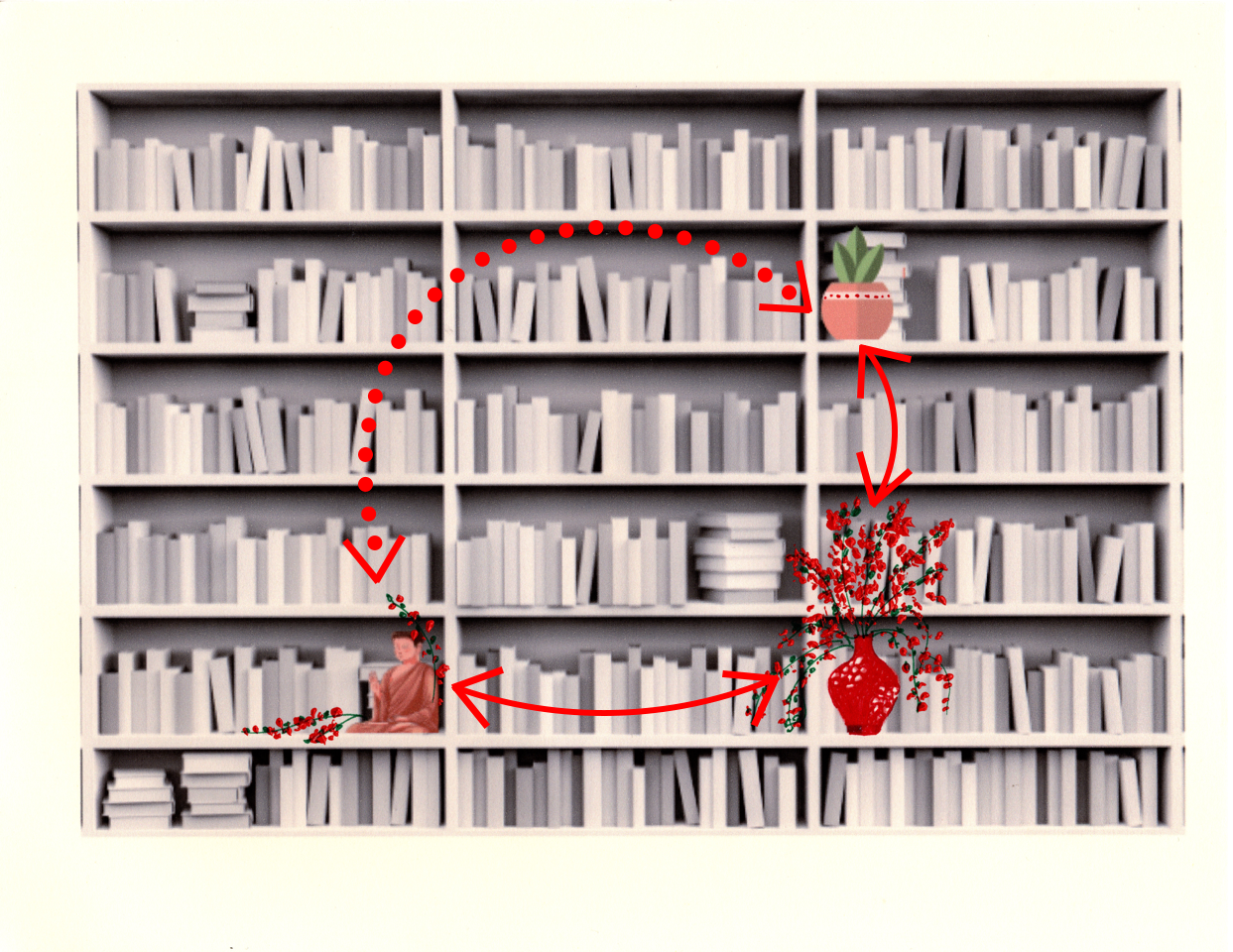
The eye will naturally travel in a circle by first focusing on the dominant vase with flowers and then search for similar colors through the Law of Similarity. Since the eye loves closure, it will automatically continue in a circular fascion, as it started to connect the empty quadrant. The law of Closure.
Two: Circling the Square by Using the Old Professor’s Theorem in Three Dimensions
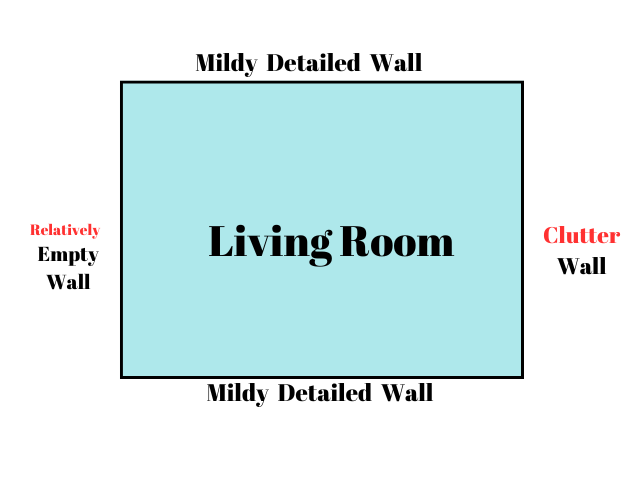
I extrapolated that if it could work on a canvas, it could work in a room. The translation from 2D to 3D is simple. Instead of four quadrants, think of four walls. I allowed one wall to be a heavily detailed and dominant with all the objects like knickknacks, clutter and small detailed objects. Two walls could have some objects, but by comparison were to be subdued. The fourth wall had to be relatively bare.
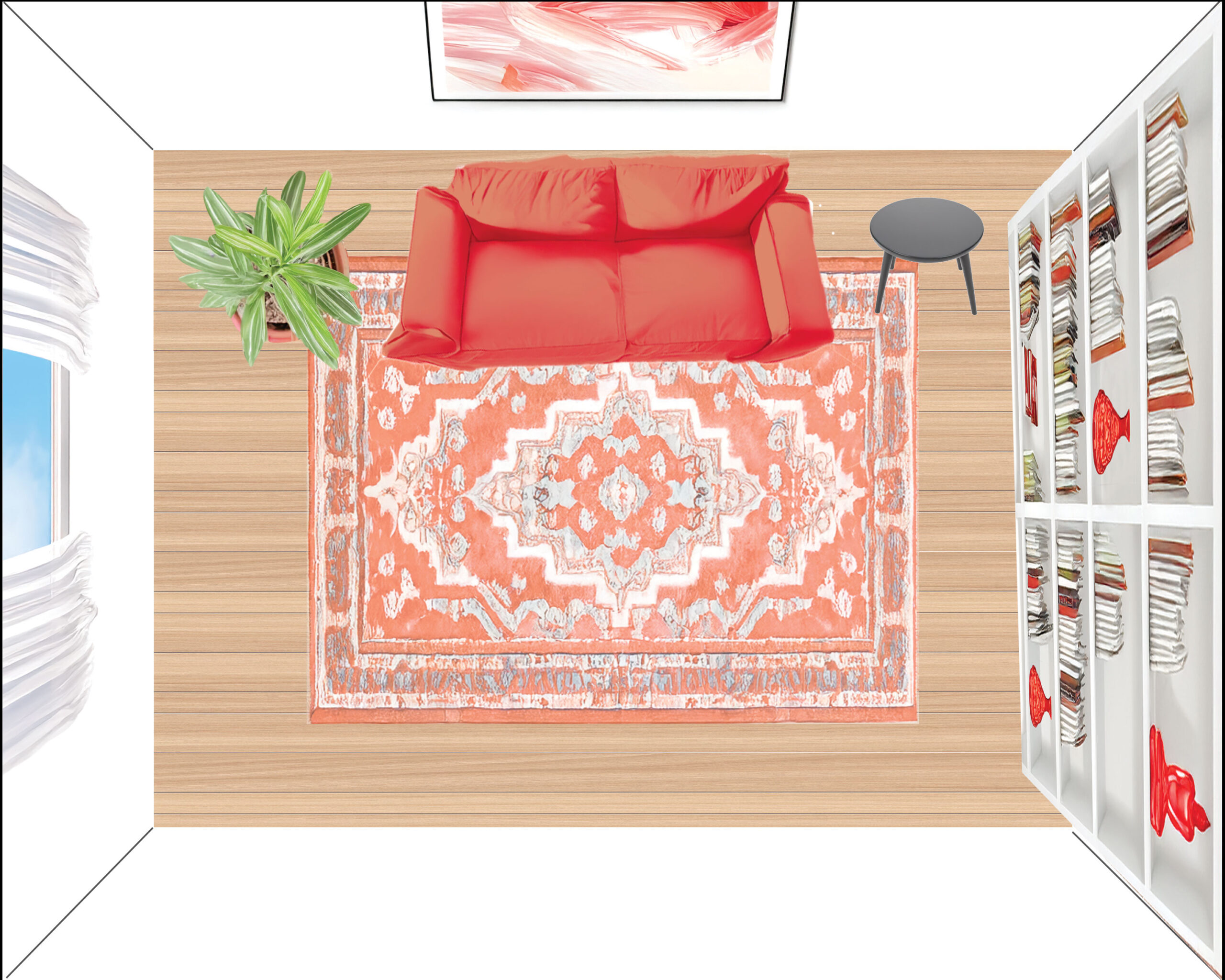
In real life, it is difficult to make one wall totally empty. The “emptiness” would be relative to the rest of the walls. Some examples of ‘empty” could be a window wall with draperies or a wall with one long table and a painting..
The effect is a pleasurable visual path. The eye moved in a smooth, often circular fashion, seeking to close the circle (See Law of Closure in The Gestalt Laws of Perception, Lesson III.
Immediately, when one uses the theorem in a room, one’s eye travels in a circular manner. This way of decorating works like magic to calm the eye and invigorate the Energy of a room. The room then becomes a safe haven, a womb of comfort and a place which can generate a feeling of well-being. It affects us not only on the basis of seeing but that of being.
If there was only one thing of the many ideas that I would want you to take from this book, it would be my adaptation of the old professor’s theorem from a scaffolding for a painting to a three dimensional way to decorate a room. It is a piece of decorating advice that does not cost money, can be utilized to affect change in a small abode and could take away the effects of clutter without throwing out a thing.
Although it is not a finished decorating project, it is a way of organizing your space for positive Energy.
The Truth About Clutter
All good designers tell us to get rid of the clutter. Even the scientists and psychologists do since clutter has been proven to cause focusing problems, increased stress, anxiety and even depression. It is also bad for design.
Clutter is considered things that are not needed, unwanted or too many for use. It tends to fatigue the human perception system. Getting rid of stuff does not necessarily help because it is not what we have but how we arrange it that counts.
“Less is more” is only a partial truth. “Less” makes it easier to arrange the geometric scaffolding. Multiple artifacts can be more challenging but that doesn’t have to be true if we arrange things according to the geometry of nature. A lot of objects are okay because
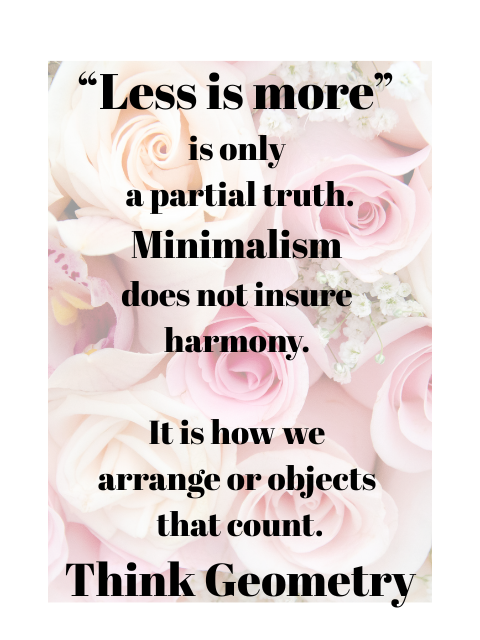
The Energy we get is not based on less fixations, details or things but on their arrangements If the arrangement is based on the geometry of nature. The Old Professor’s Theorem helps to group more into less.
It is not the objects that we have that make us overwhelmed, it it is their arrangement.
Aside from using the Old Professor’s Theorem, there are some Gestalt tricks that get you to see more as less.
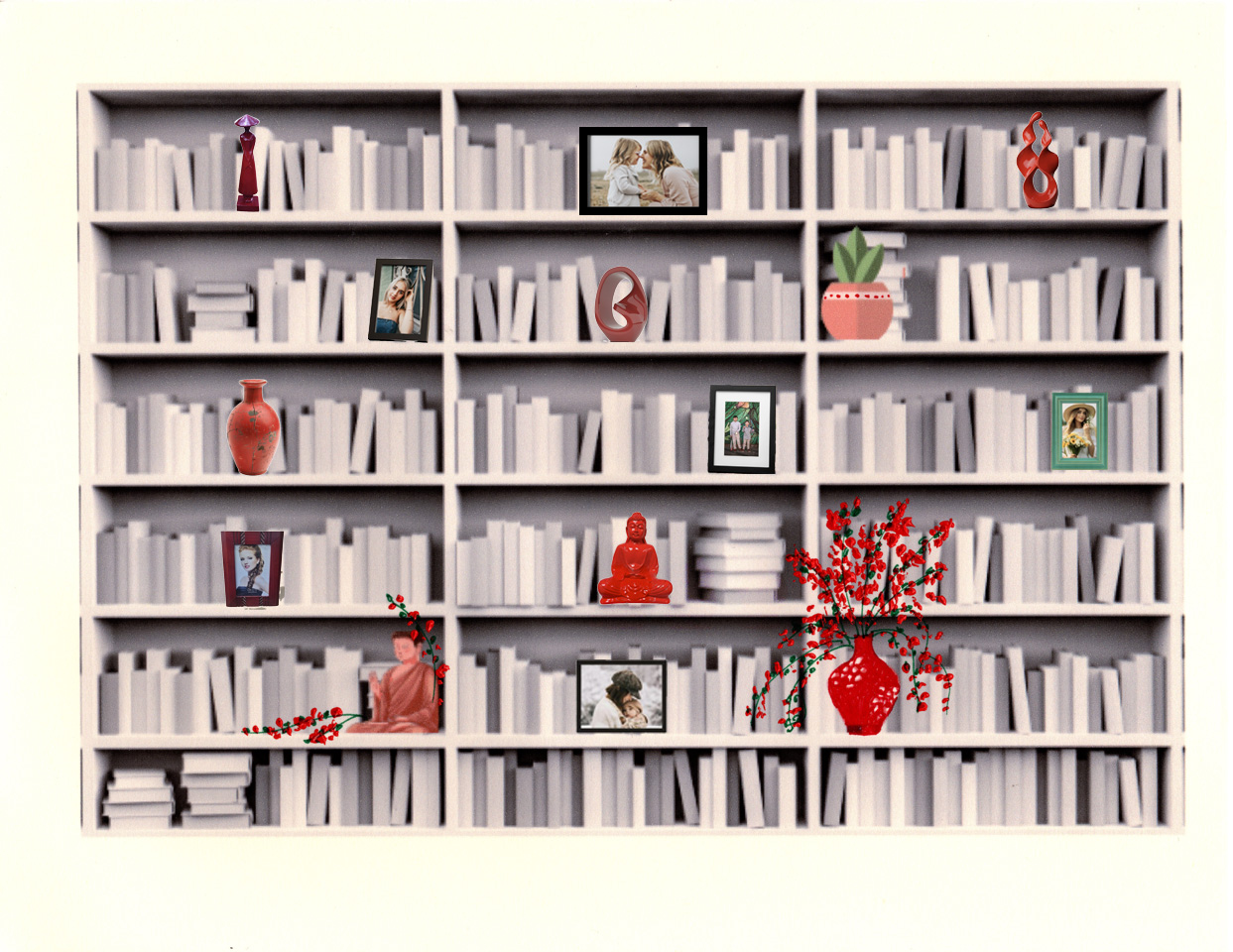
Look at the book shelf of red statues and nine frames. Two of the frames are different colors. The eye is bouncing around all over the place looking for similar objects.
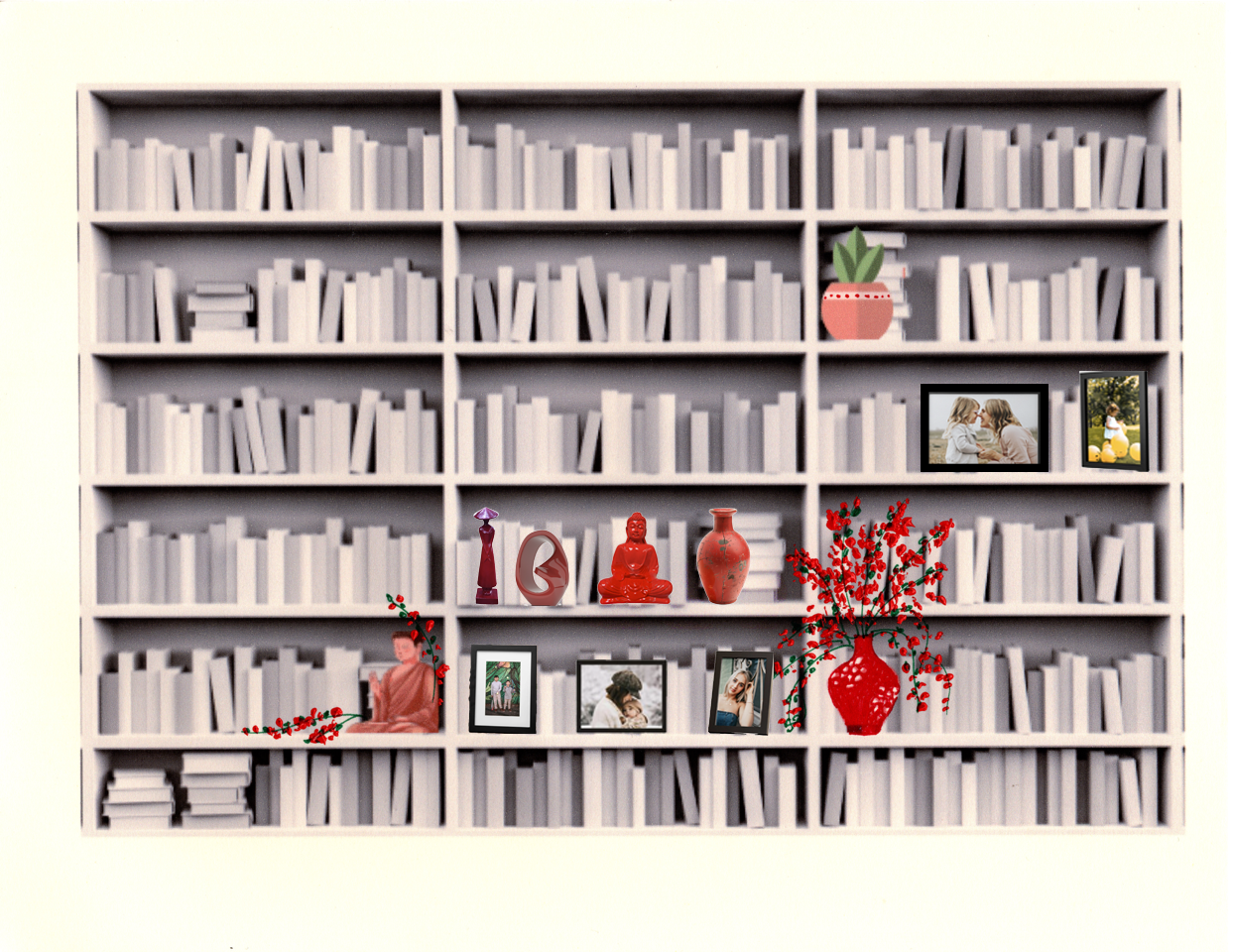
Now look at the changes in the bookcase.
- Arranging like things close together makes several fixations into one. (Law of Proximity, The Gestalt Laws of Perception, Lesson III.) So when you are looking at the red statues in a group, your brain perceives them as one fixation and relaxes. That is also true with doing two groups of frames. In addition, the red and green frame disappeared and was replaced by black frames like all the others. The eye then went from nine fixations to two. The brain used the Law of Similarity and arranged the nine fixations into two. The Gestalt Laws of Perception, Lesson III.
-
Containing things on a tray, corrals many fixations into one. (Law of Common Region, The Gestalt Laws of Perception, Lesson III) . Not sure I will use this writig since I wouldn’t put a tray on a bookcase. For another piece of writing
Changing Perspective Through Movement
One may ask what happens when we change position through movement. If we are looking at the dominant wall which has been gridded, a slight turn changes the scaffolding in our line of view. That is true; scaffolding changes as our vision changes as we move. Sometimes we are looking at two walls, or three walls, (if we include our peripheral vision.) When we do that, the gridding of one wall becomes distorted in our range of vision, e.g. the dominant object may no longer be in a quadrant as our field of vision changes.
To add to the problem, we have to understand that even though we live in a 3D world defined by 360 degrees, what we see in front of us is 180 degrees, which is like looking at a 2D picture with qualities of depth. Of that 180 degrees, we only see clearly in front of us, 60 of the 180 degrees, called the cone of vision. To the right and left of this cone is our peripheral vision. So our plane of vision to some extant is two- dimensional with a three- dimensional perception of depth, with the greatest focus in the middle. Then when we move, we see a completely different picture. The scaffolding changes, negating the scaffolding of the Old Professor’s Theorem .
Give this no worries. Deriving Energy from the environment is based not just on seeing but on being. Movement does not affect the value of these design effects because we also derive Energy by being near good patterns. See Finding Energy by Being Inside a Geometric Pattern, Lesson XIV
Three: Circling the Square by Cutting Off Angles
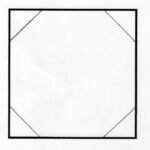
One way of creating a pleasurable dance for “the Eye” (the visual perception system acting in service to the subliminal self) is making the square appear closer to a circle (or rectangle closer to an oval). There are no straight lines in nature, except for a few crystals here and there. One way to create a more circular effect is to catty-corner furniture in the corners of a room. Each time we cut off an angle we start getting closer to a circle. Note how the square starts approximating a circle as we progressively cut of the corners.

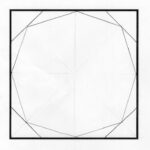
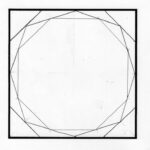
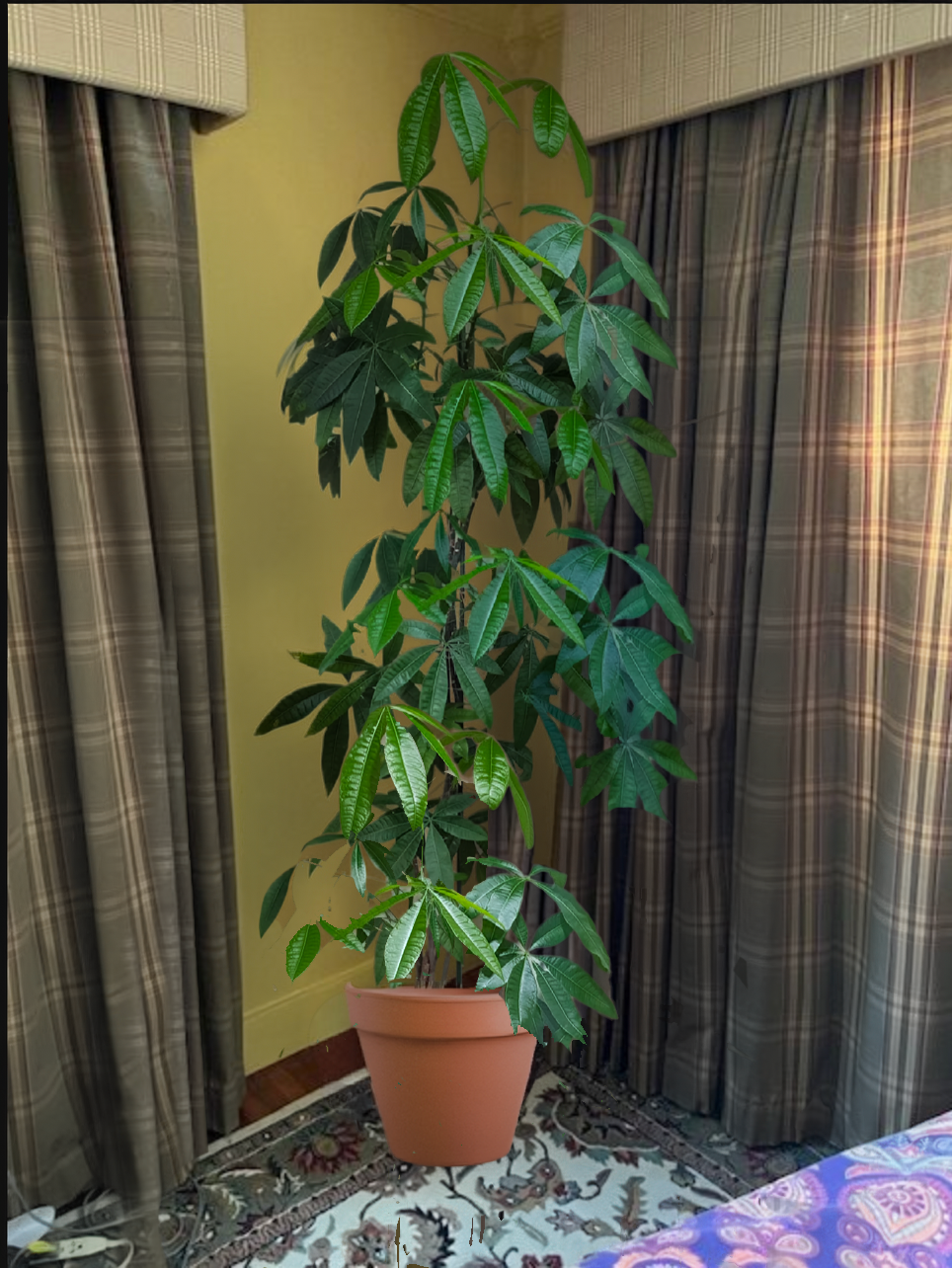
Feng Shui has a similar disdain for the corners of the square or rectangle. According to that tradition, corners trap energy, resulting in stagnation. Its solutions are diversionary methods of moving qi like the placement of fountains, chimes and plants. Mine are more Western, i.e. geometrical, although if a plant were big enough, it could be used to round off a corner.
Using Furniture to Cut Angles in a Room
In a room, here is a way to round off the angle. Place furniture, like this couch, catty-cornered in the room, cutting off equal parts of the two walls making the corner.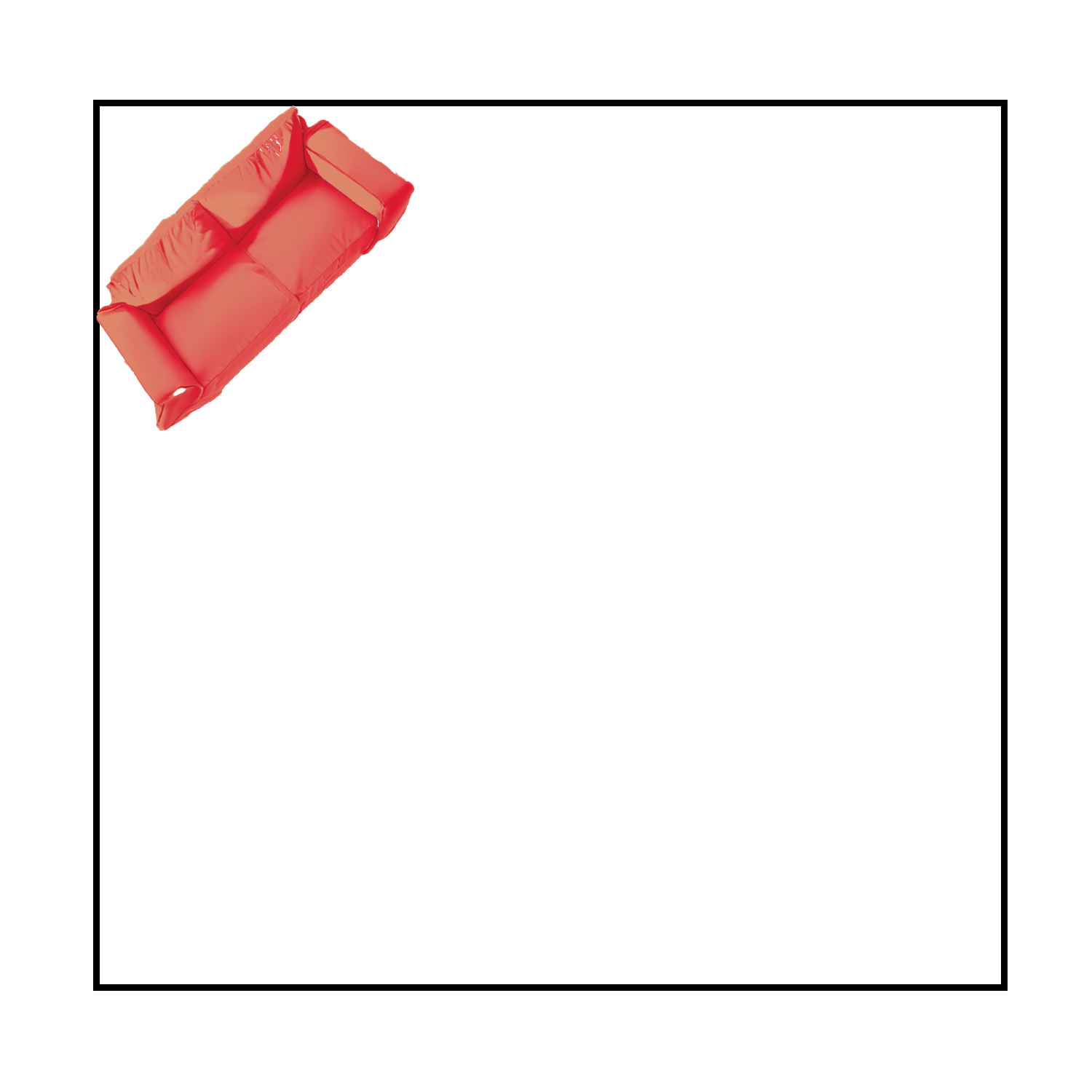
In this manner “the Eye” sees the room as more organic. This is a method that decreases space, however, thus it is not considered functional. If you can’t give up that much space, you can place the furniture slightly askew, just subtle enough to add a hint of offsetting the square.
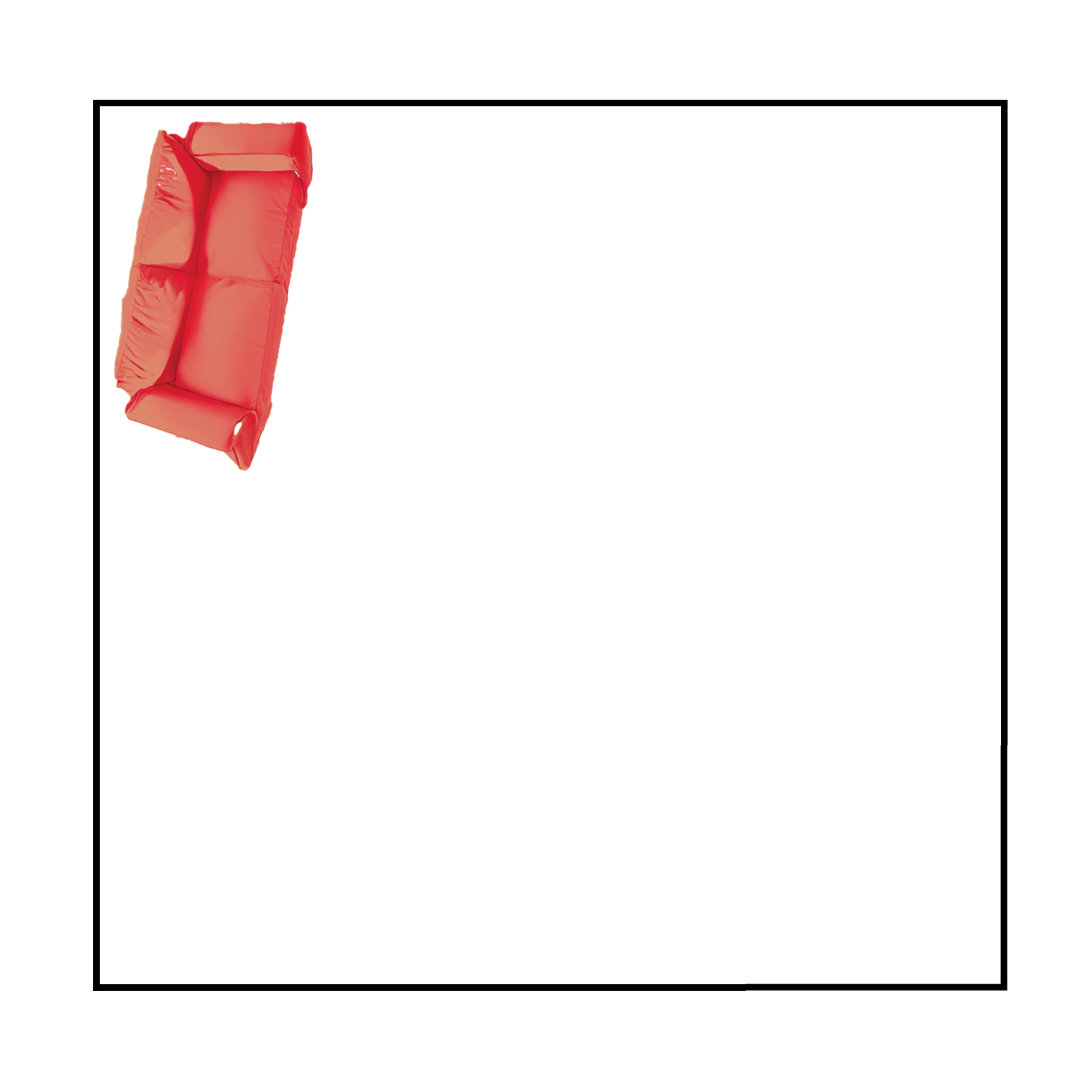
No doubt putting a piece of furniture against a corner is not functional since it “wastes” space. It does improve form however, creating more Energy. The trick is to find ways to utilize the space in the corner, which would then make form and function one. Placing a table with a lamp behind the couch eliminates wasted space when eliminates the jarring angle.
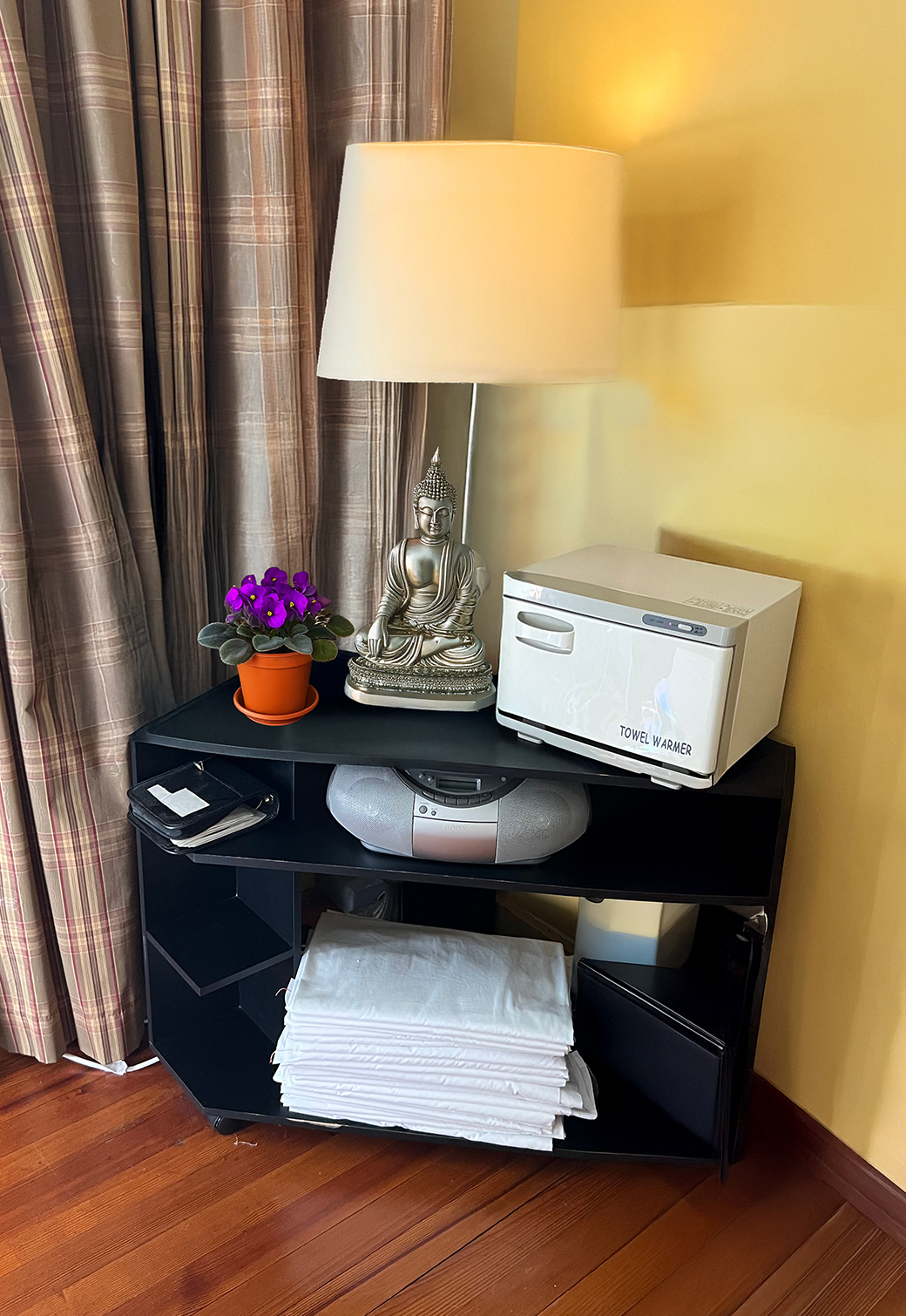
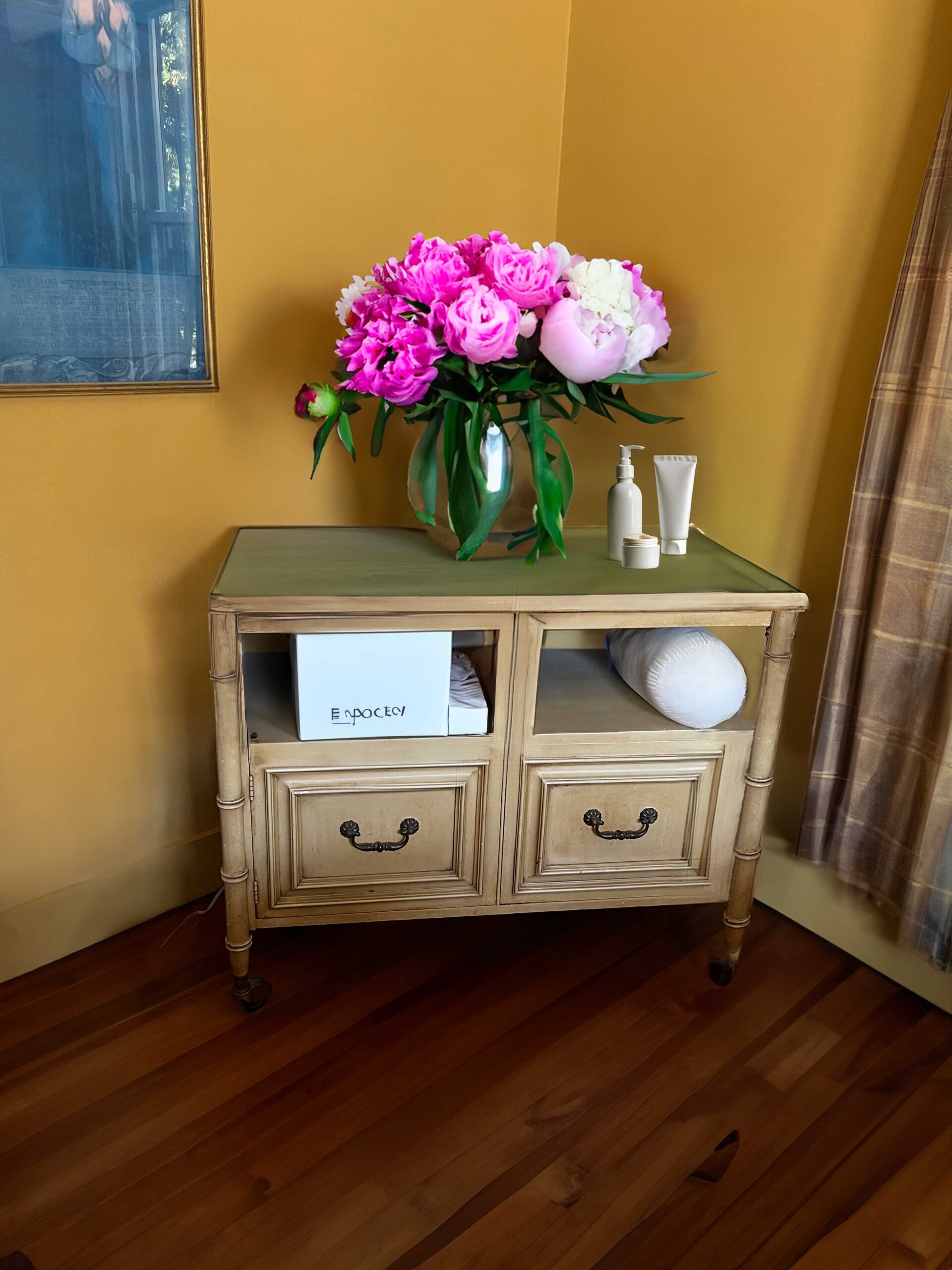
In the real world, you probably cannot have every corner rounded off. I have an open plan living room, dining area and kitchen. With the hall, I have six corners. With doors, windows and a lack of space, I was only able to angle four of the six corners. One was the use of a large plant. That was enough, however, to give a circular movement.
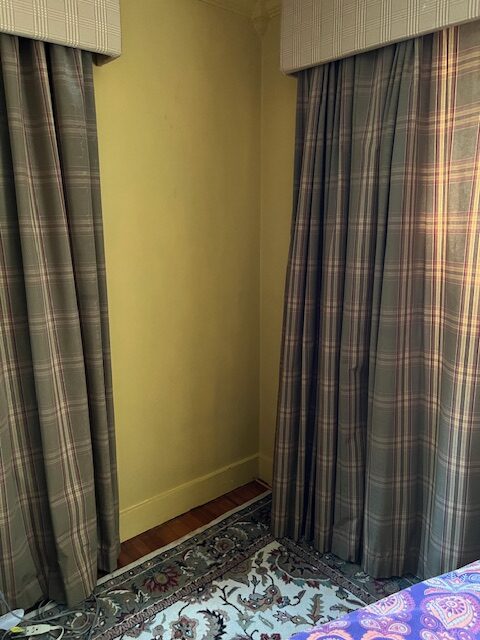
Another way to round off a corner is using a tall houseplant.
Four: Using the Gestalt Laws of Perception
To enhance the movement of the eye traveling
in a circular manner, consider using the Laws of Similarity and Law of Good Continuation. (The Gestalt Laws of Perception, Lesson III.) Choose a similar fixation, be it color or texture and repeat it at intervals on or near the walls or in the middle of the room. A fixation can also be a group of objects. For example, a group of baskets is perceived as one form. Color, however, is the most used fixation to move the eye. The good news is that where ever you place these like color items, the brain will create a peaceful path because it goes along with the Gestalt Law of Continuation.
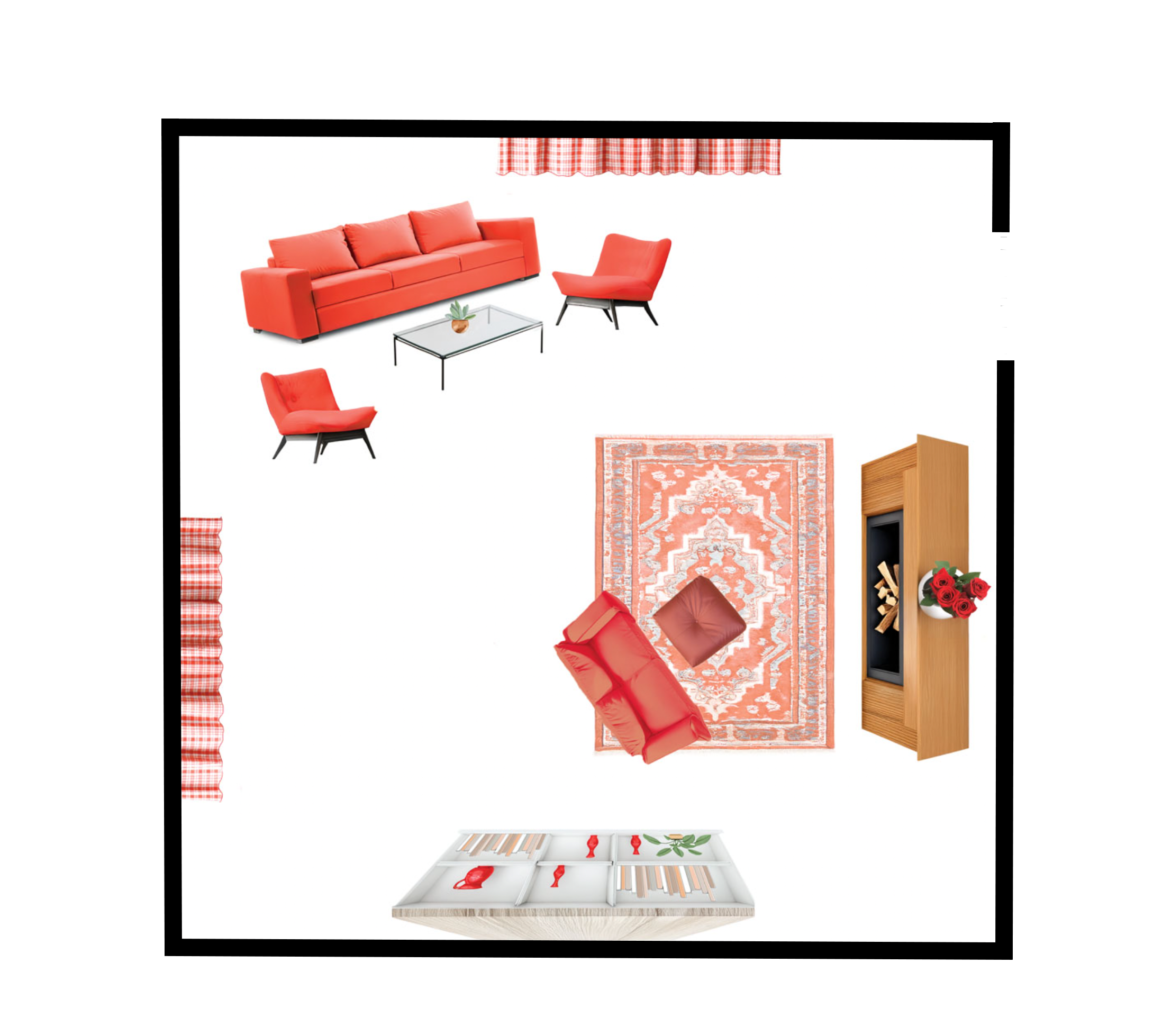
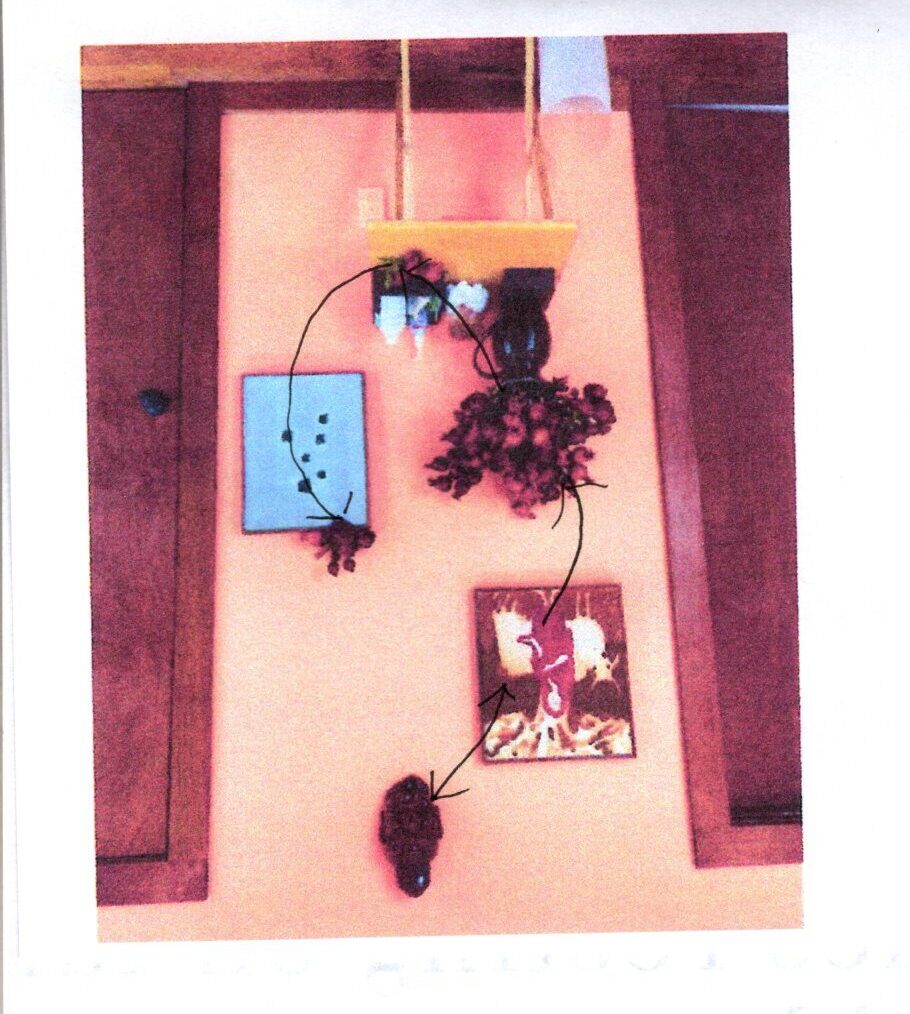
The brain’s use of the Law of Similarity doesn’t make the eye jump from one red item to the other like this because the Law of Good Continuation takes over.
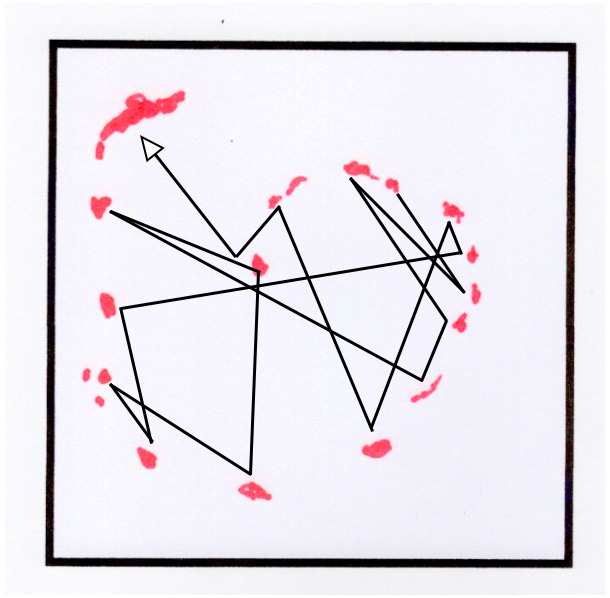
Instead the brain’s use of the Law of Good Continuation makes the eye choose the smoothest path possible like this: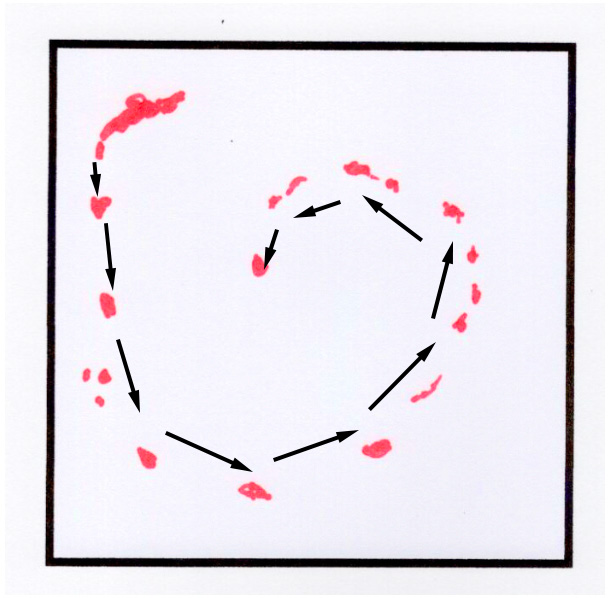
It is always good for one object to be larger, like the couch than all the others to give the eye a place to start, also known as the focal point.
Laws of Good Continuation and Similarity to create a Circular Movement on a Wall
My acupuncturist’s husband always insisted on hanging pictures on studs. A circular look could not be achieved so we had to work around this. The top left picture’s colors did not go with the peach wall.
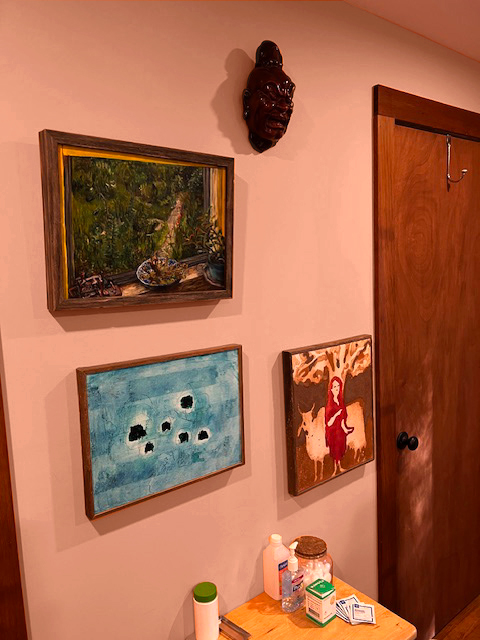
Just leaving that picture there was improved by adding some flowers on the frame to connect with the flowers in the vase.
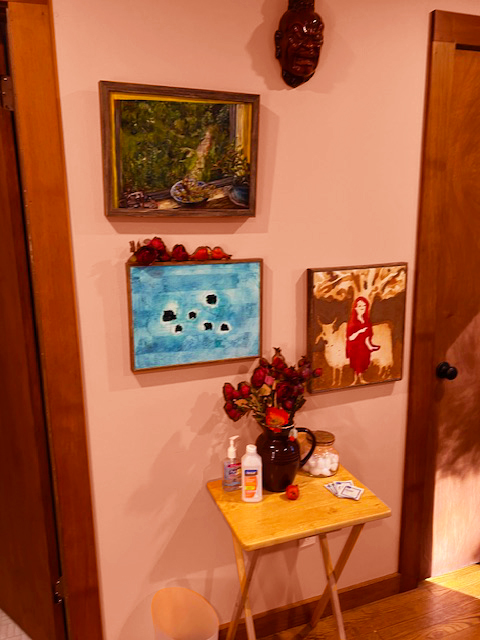
The big improvement came when the green picture was removed and we kept the colors of only peach and blue.
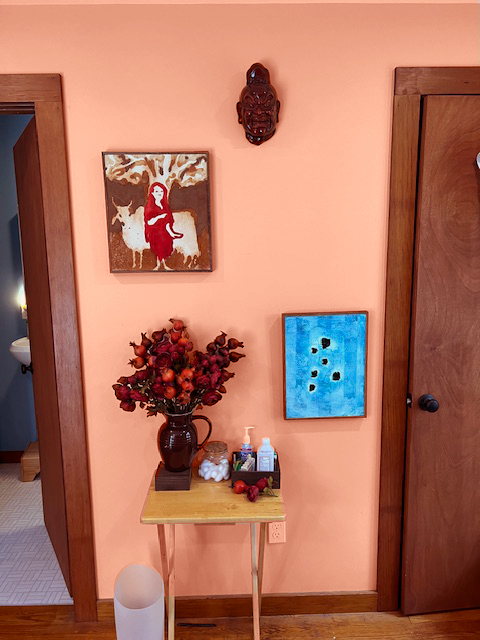
Just a few flowers on the blue painting pulled the eye further as a circle. The blue on its own would not have pulled the eye. It needed the red.
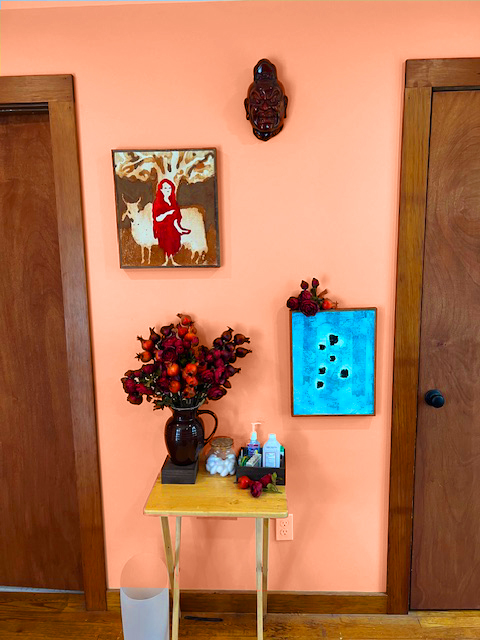
Just a few flowers on the blue painting pulled the eye further as a circle. The blue on its own would not have pulled the eye. It needed the red.
How the Law of Similarity Can Connect All Objects In a Room
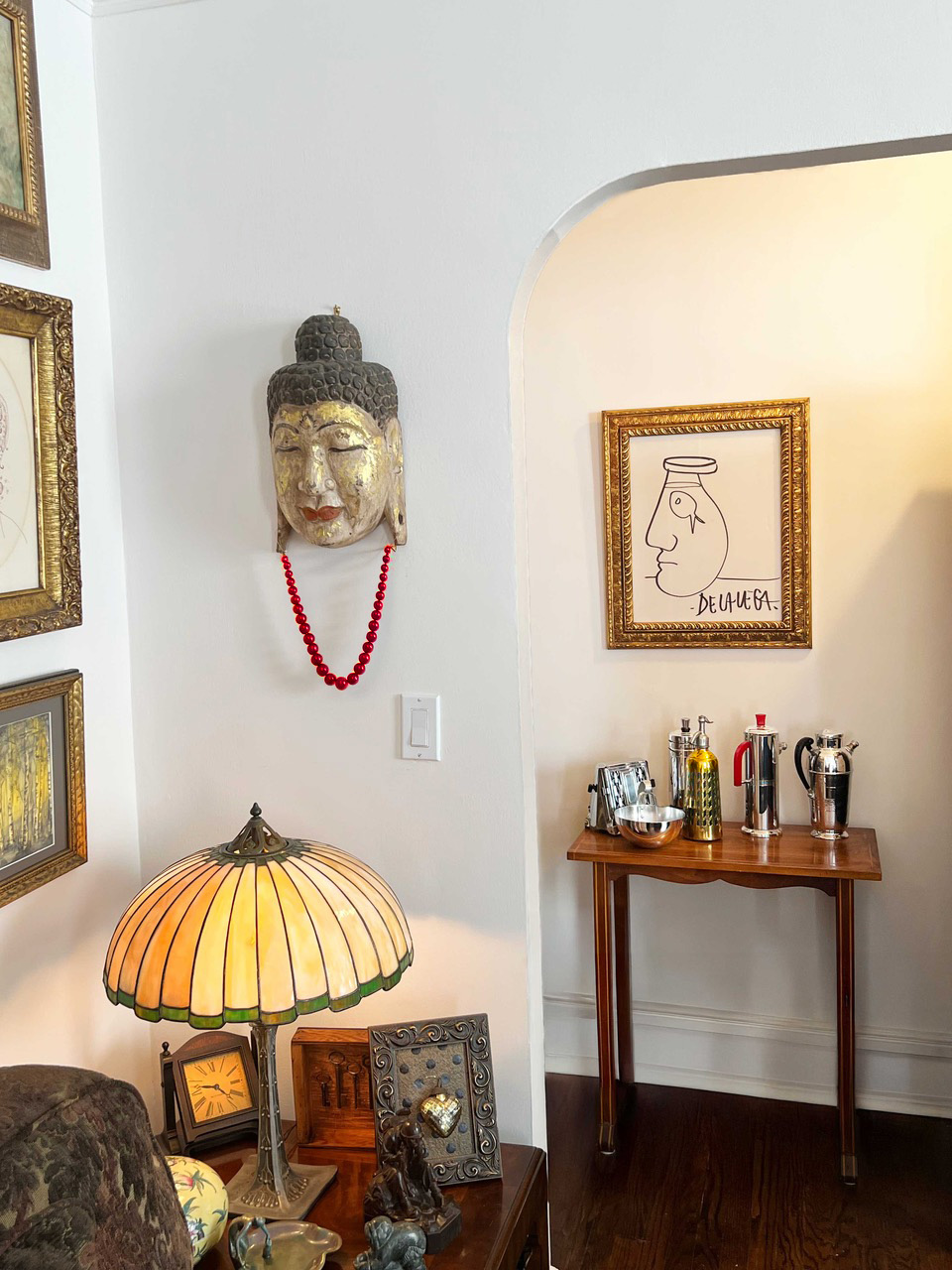
This is a picture of my hall and living room. My mission is to use the Law of Similarity to make each object start to flow in the beginnings of a circle.
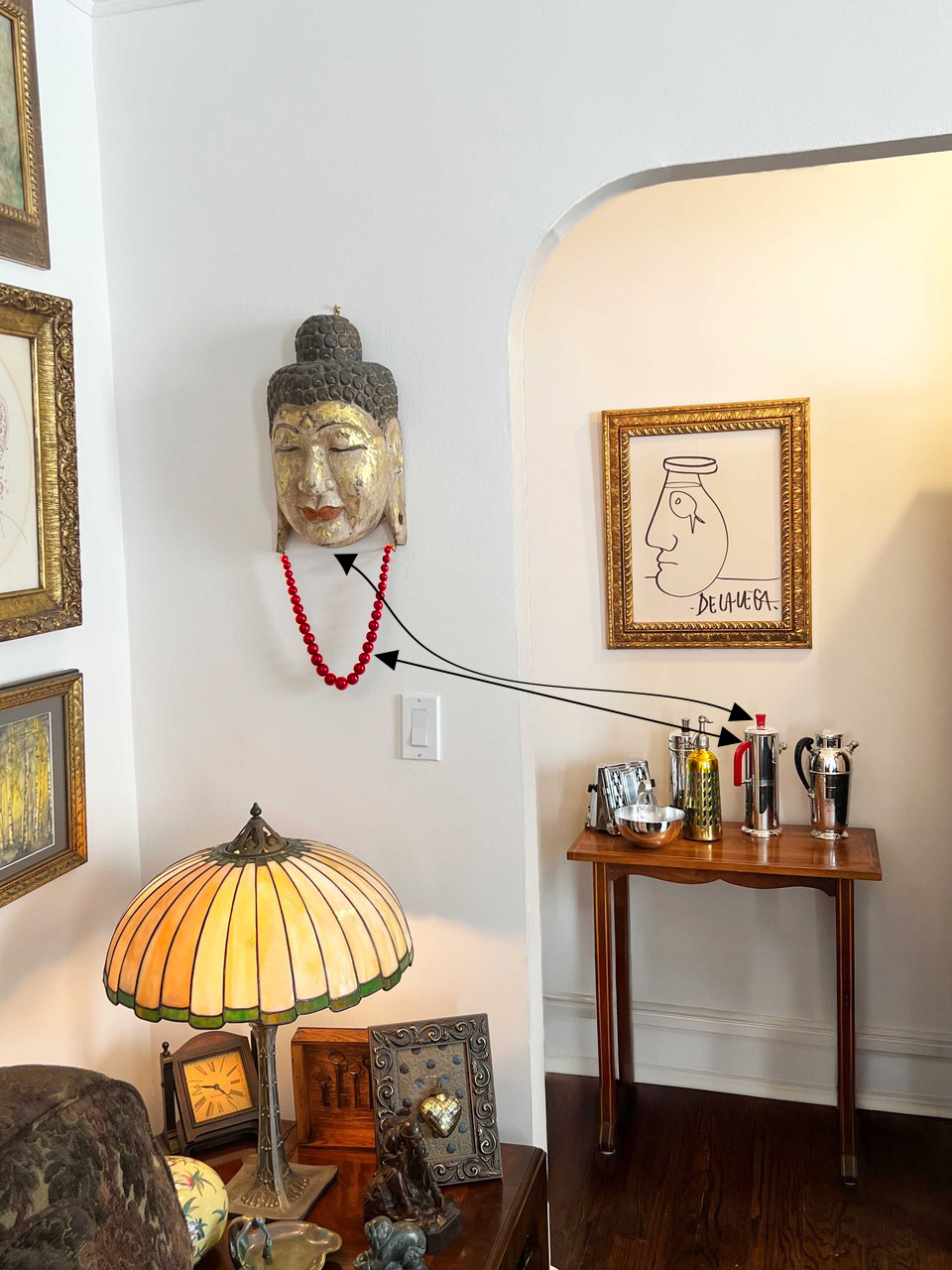
The red bakelite on the shaker makes the eye travel to the red on the Buddha’s lips and beads.
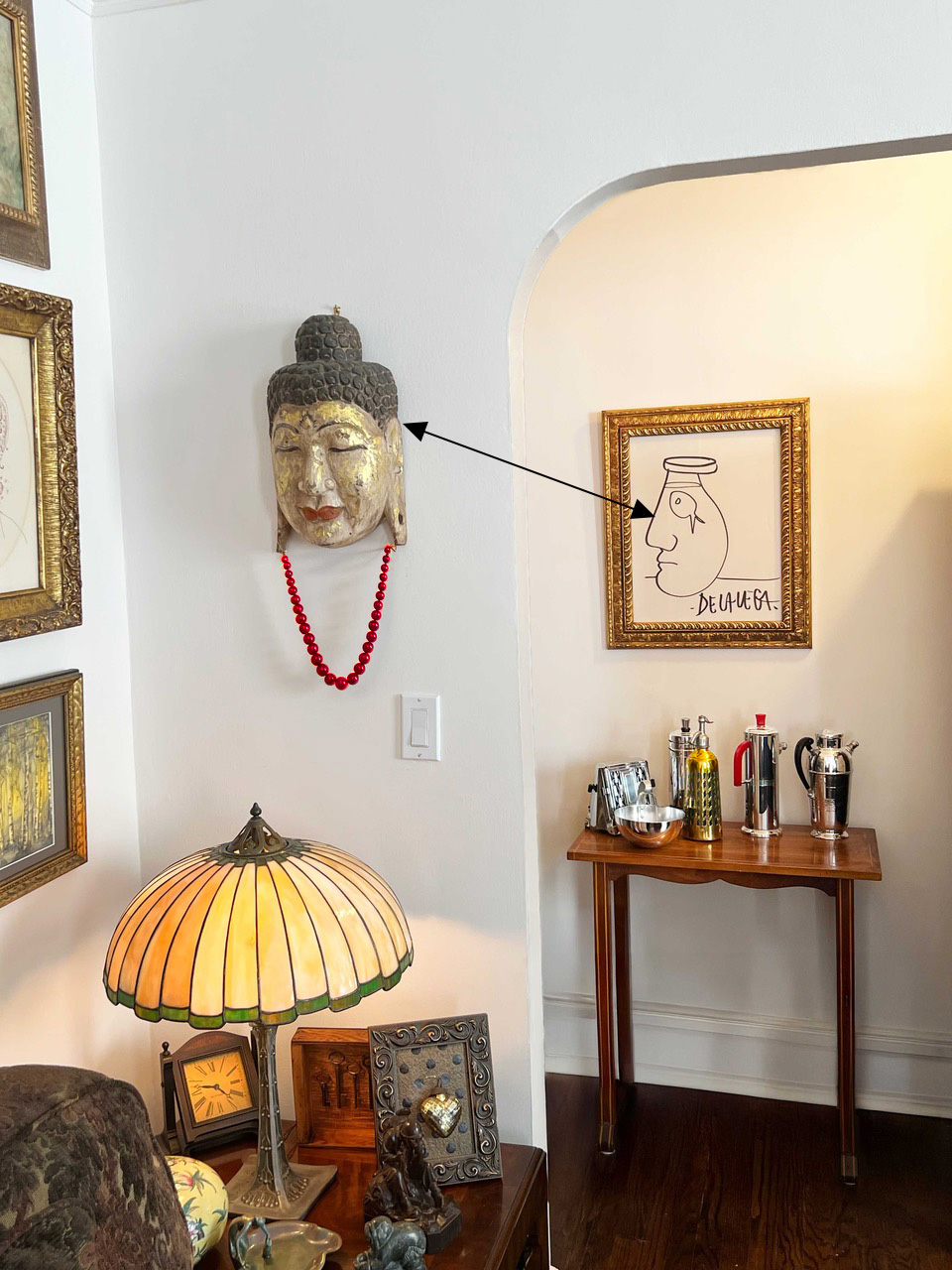
The eye moves from the black lines on the Delavega painting to the black of the Buddha’s hair
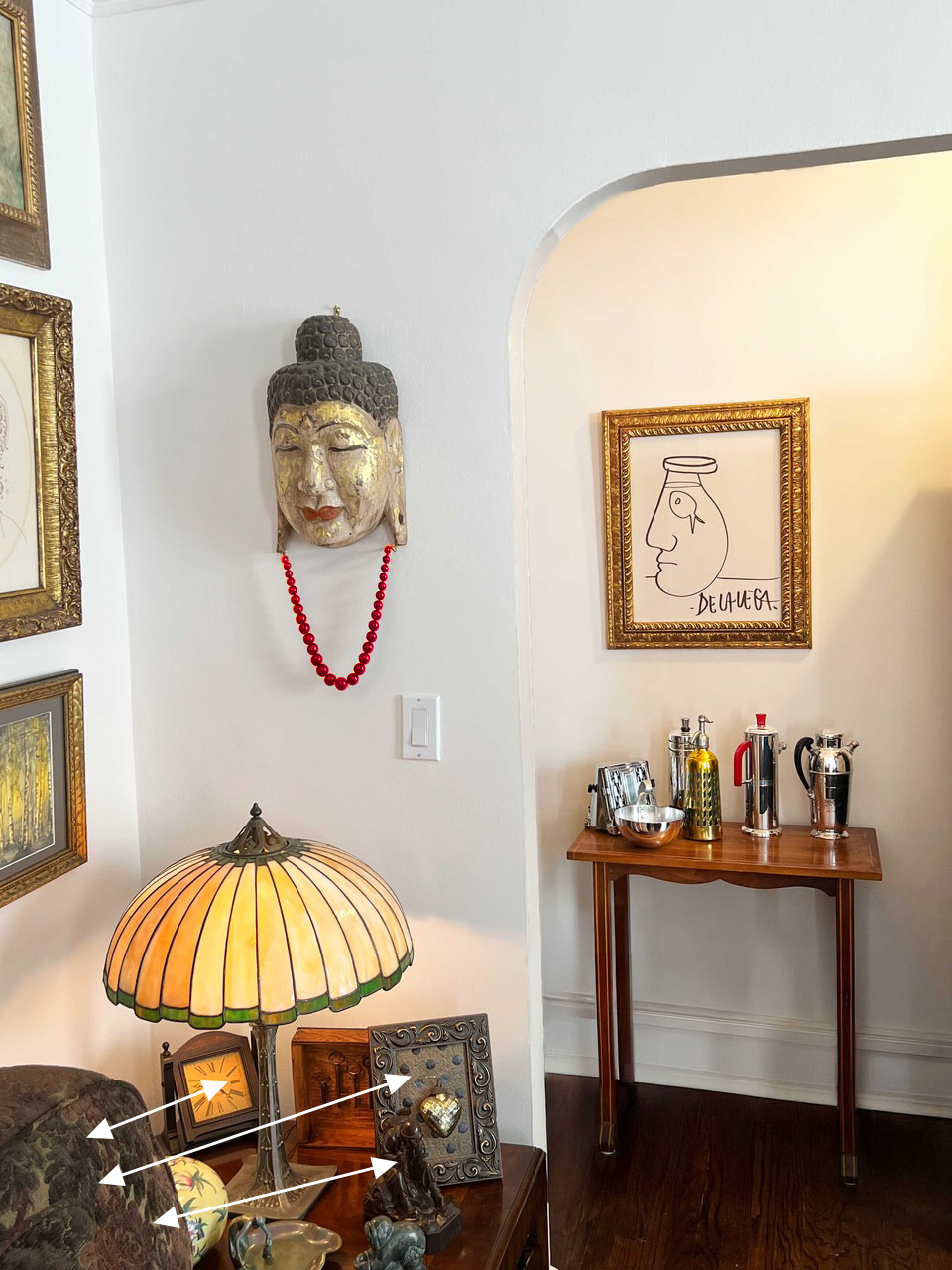
The eye connects the brown frame, table and clock to the brown on the couch.
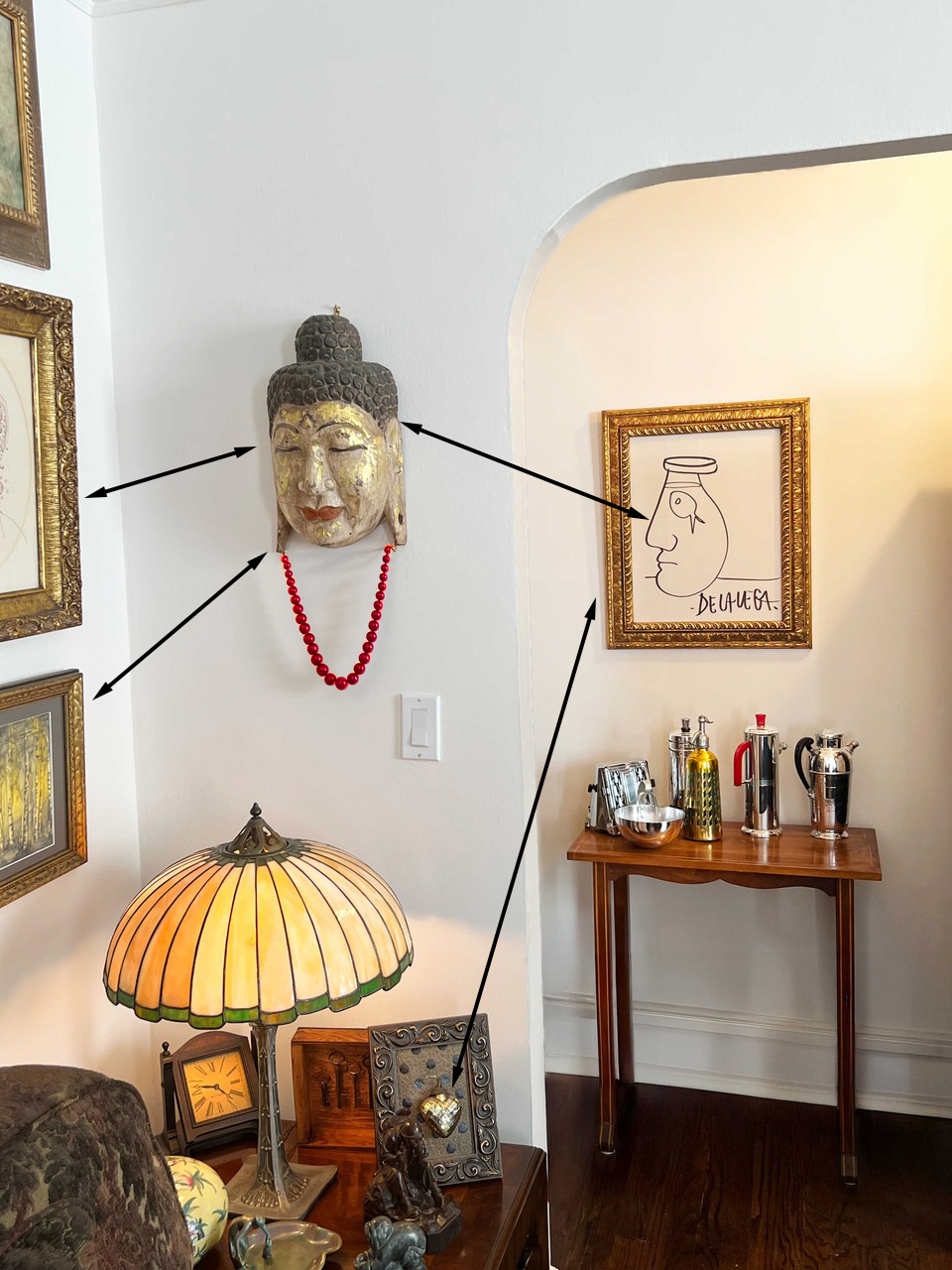
Most significantly, the eye connects all the gold and brass items together. As it connects the frame on the Delavega painting to the Buddha’s face to the heart ornament and to other gold frames, the eye is starting its journey as a circle.It will find throughout the room, the same colors to complete the elliptical form.
Color Choices to Move the Eye
Monotone
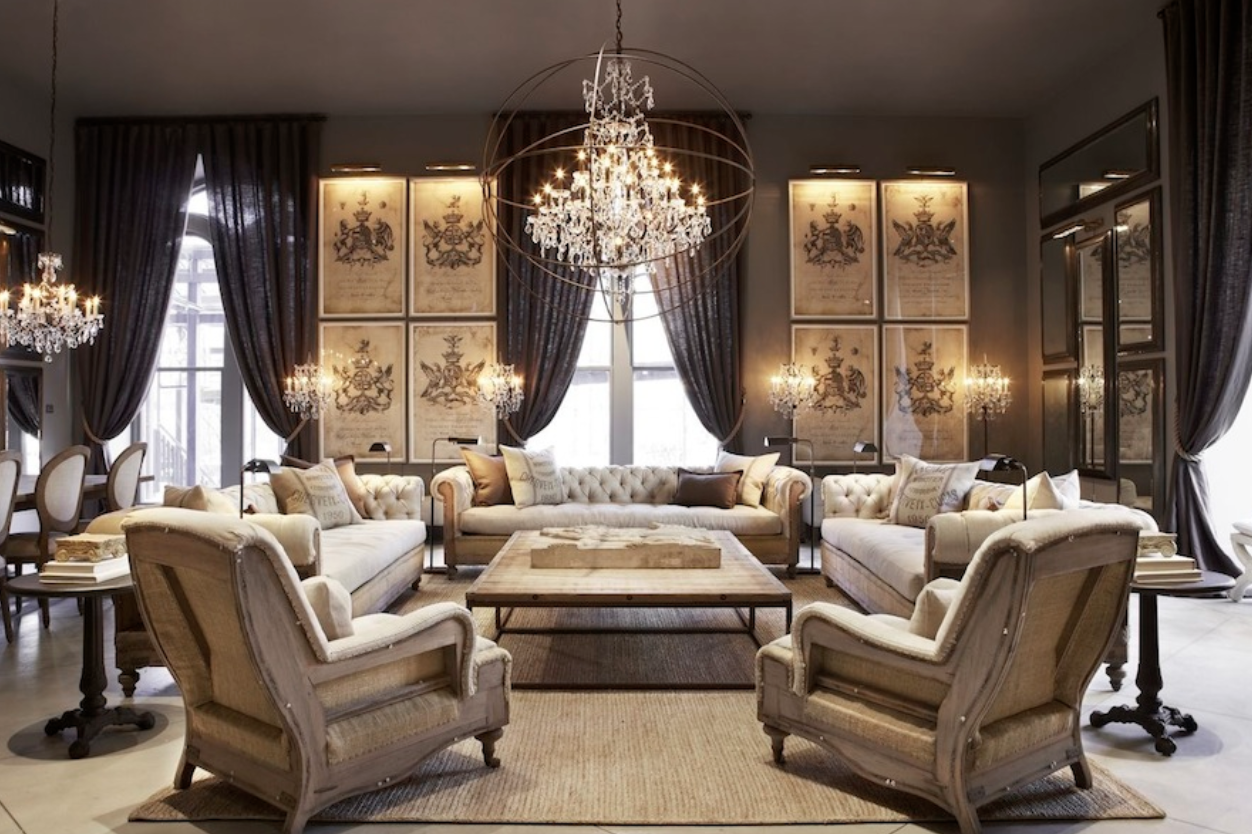
One of the easiest ways to decorate is to use a neutral monotone palette: browns, grays, black, taupe, brass and silver. It is quite a popular decorating style because it provides an extremely peaceful environment. The reason for that is there are few fixations to make the eye jump around. In fact, the room is one color, one fixation (yes there are many fixations as the perception system reads each object.) Yet, it doesn’t read that way. It is like a comforting womb, certainly not dull with the texture of brass, silver and wrought iron. Restoration Hardware uses this color scheme. The following pictures are examples. Although the items seem pricey, this color scheme can be done on any budget.
Yet………, the real world poses difficulty in starting over to achieve this monotone affect. First of all you might not like it, being a yellow-and-orange person. Also, to begin again in monotone you might have to throw out everything you have. Even if I had the means, I just couldn’t do it. Not because I am a hoarder but I don’t like waste. This book is not about starting over but working with what you have.
.

We live in a small apartment. Within it, we have a mish-mosh of items from our first marriages, our deceased parents and an assortment of decorative gifts. Plus, we love to collect and do so without regard to the color scheme of our living spaces. There is no monotone here.
In the lives of most people, we can’t throw out everything and start over…nor should we. The best you can do is to approximate a monotone environment by negotiating your color choices. Remember, that even though color is known to have specific energetic effects, I am only using color as a fixation that can create a scaffolding.
In Lesson Let the Eyes Have a Pleasurable Dance, Lesson VIII, Part B, we will examine this process.
*****
There are two parts to this website, The Lessons, which are more difficult in concept, and the blogs, which are lighter in nature. Blogs that you might enjoy with with a similar theme to this lesson
One Lesson that relates to this lesson is:
Clutter Emergency? – How to Cope with the Stress I have also used the theorem in a decluttering program.
Please note that my website allows you to leave comments at the end of the blogs but not at the end of each lesson. If you have a comment or question about a lesson, you may email me at ruta@rutas-rules.com