Metaphysical decorating is decorating for energy. Most of it comes from our subliminal seeing of the natural patterns found in nature. Unfortunately, the use of patterns has been ignored in the modern age and replaced by the use of visual symbols. Without a good pattern, however, a loss of energy occurs. To create an energetic living space, we have to understand how to use patterns and minimize symbols. In this chapter, Patterns and Symbols in Decorating, Lesson VII Part A, we will begin to look at this process. It is a difficult read but one that is necessary.
Be Patient With the Difficulties; You Will Be Rewarded

Thinking
There is a lot of confusing interplay between symbols and patterns. Be aware that it is EGO that is the main culprit when patterns war with symbols.
- If the ego cannot see the original pattern, two things can happen:
- The energy depleting lack of pattern can’t be seen and therefore not repaired. (Part A)
- A graphic distortion can occur when reproduced. When the distorted symbol is used, it depletes us. (Part B)
- Sometimes the ego is so strong, it can actually change a symbol’s meaning. (Part C)
- Symbols, though usually ego bound, are part of life and most are quite enjoyable, but unless they are displayed in a harmonious pattern, energy is depleted. (Part D)
- Most powerful symbols get their energy from the mathematical patterns of nature, which is very attractive to the ego. The ego is addicted to that power. (Part E)
What is a Symbol?
The definition of symbols are often confusing depending on various thinkers. They can range from the simple to a complex communication with multiple levels of meaning.
According to Wikipedia, “a symbol is a mark, sign, or word that indicates, signifies or is understood as representing an idea, object or relationship.” They can act as visual aides to better understand complex ideas or concepts. In some way, symbols are a language in which we find our way in the world. Some symbols often have multiple layers of meaning while others have a simple one-to one correspondence
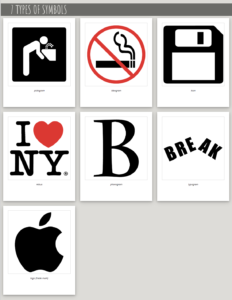
An example of the simplest is the 7 types of symbols in visual communication:
An emoji is an example of a simple symbol. They only have a one-to-one image translation. One emoji represents one emotion.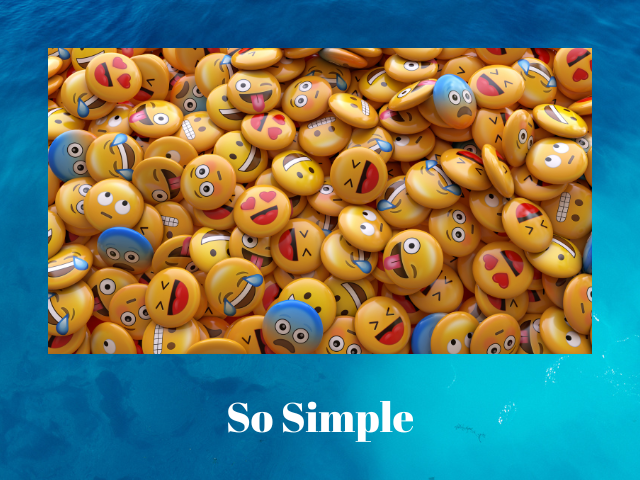
From the Simple to the Complex
Various scholars have weighed in on the use of the term symbol. Carl Jung, who incorporated symbols in his concepts of psychology, said that a lot of what we consider as symbols are just signs. All the photos above, including the emojis, Jung would consider a sign. According to Jung, A true symbol “states or signifies something more and other than itself which eludes our present knowledge.” He taught that some symbols could never be fully understood because their true meaning resided in the subconscious, a place that never truly sees the light of day.
Paull Tillach, in his theological writings, believed symbols unlock dimensions and elements of our soul which correspond to the elements of our conscious reality, thus enriching our daily lives. Like Jung, Tillich sees the difference between signs and symbols. Tillich would consider a flag a good example of a symbol since the flag in its conscious reality brings forth a soul felt feeling of the flag as a reminder of the best of a country’s virtues.
On the other hand, according to Debra Merskin, in Flagging Patriotism: the Myth of Old Glory, a flag as a symbol can easily be changed to a sign. Citing Joseph Campbell, symbols can be misused to become “effective tool of intolerance, coercion and control, representing the societal- level shadow of Jung’s collective unconscious. She believed that happened to the American flag after 9/11. After George Bush’s speech to the world stating that nations could be either for us or against us, a ‘us and them mentality’ took over in the U.S. The American flag, as symbol of rich historical and cultural relationships, changed into a sign and prepared us to go to war.
A symbol has a great deal of freedom behind it. It makes us ________________. If we see it as someone pushing us to some dry orthodoxy with no fluidity to meaning, consider it a sign.
What are Patterns?
Patterns are blueprints for creating an object. They are the subliminal scaffoldings that make up the structure of design. Patterns, which are based on the geometry of nature, have a more ethereal quality unlike symbols or their ego based counterparts, signs. Hopefully the symbols we see are also pattern based. An easy place to see the interplay of symbol and pattern is in architecture.


Their symbols:
- The The Great Pyramid of Khufu is a symbol of the possibility of a life after death, a connection between the earthly and divine realms.
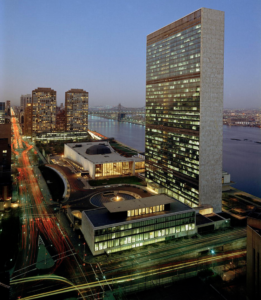
- The United Nations Secretariat Building is a symbol of the unity of all nations, hope and the promise of peace.
- The architect, Minoru Yamasaki of the World Trade Center saw them as a symbol of peace. Generally, people thought of them as a symbol of America’s economic power, prosperity, globalization and capitalism. That meaning resonated with Osama Bin Laden as he attacked the buildings twice, the latter’s success changing the world forever. Today their memory is a symbol of America’s vulnerability and loss.
Their Patterns:
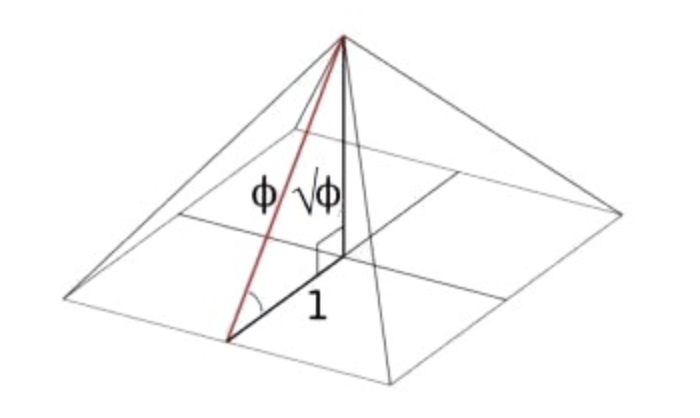
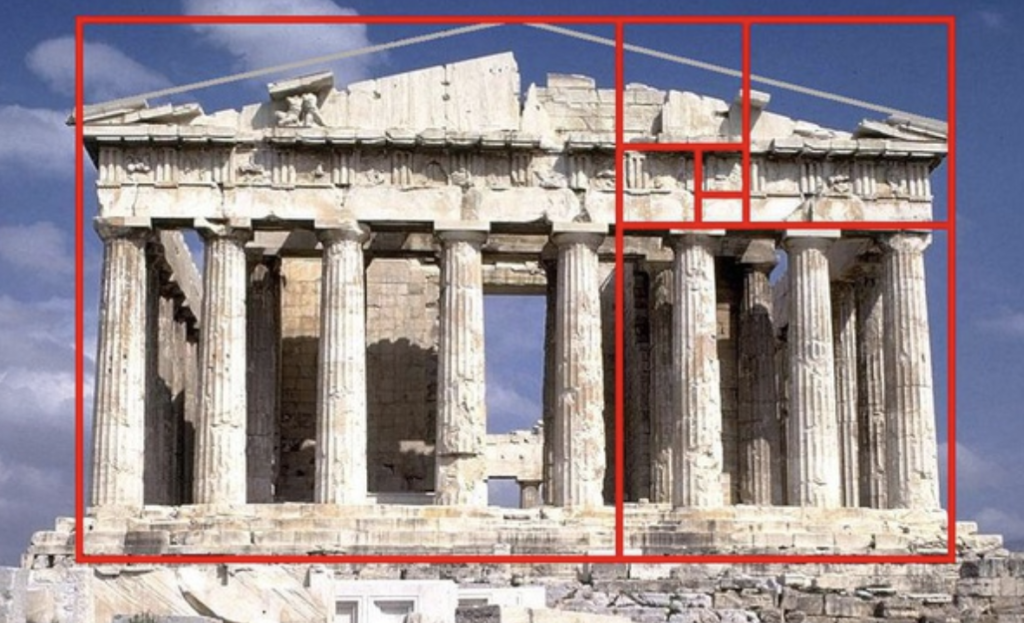
- The Great Pyramid of Khufu is is based on a pattern found in nature. If half the width of the base is 1, the slant of the height would be 1.61803399… symbolized by Φ , also known as phi. The ratio of 1 to phi is known as the Golden Ratio, (For further explanation on phi, see the blog, Understanding the Golden Proportion.)
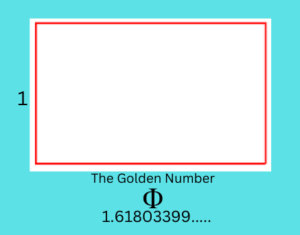
- There is similar math pattern in the United Nations Secretariat Building. One of the designers was La Corbusier who used the Golden Ratio in all his work. He piled three Golden rectangles (rectangles with the ratio of width to length as 1 to 1.16183) to create the towering building.The height of the building is also 1.618 times the width.
- From my understanding, there was no pattern based on nature connected to the World Trade Towers. People delighted in observing the city from the top floor and the views were spectacular but the buildings didn’t seem to have much energy. In fact, before 9/11, New Yorkers dismissively called them the boxes in which the Empire State Building and Chrysler Building came.
The Ego and Visual Perception
I learned how powerful the ego can be o a symbol while planting flowers in front of our NYC coop. A woman from the neighborhood approached me. She loved my gardens and told me that she used to do the planting in front of her own building. To her obvious dismay, she was thrown off her building’s gardening committee because she planted morning glories. Because the building considered them too “country” and unsophisticated, they decided on boxwoods instead even though their shallow roots did not do well in the limited space of a window box in the midst of freezing winter winds.
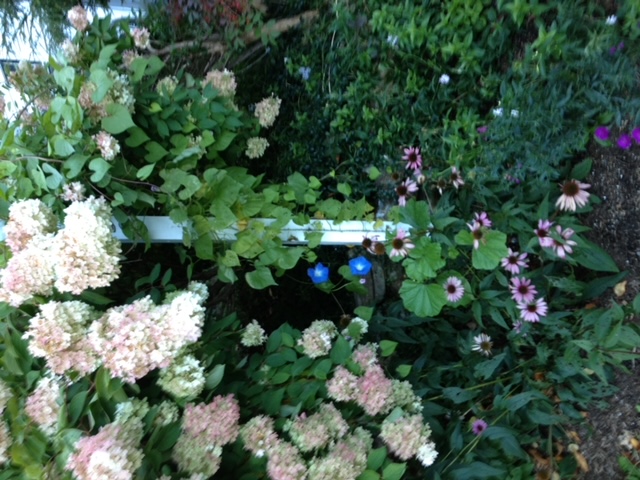
“Does this say expensive coop,” she asked with agitation, “living with dead brown balls in the window?”
I always wondered why boxwoods were popping up in all the tony neighborhoods of NYC over the last decade. Many times they were placed in tree beds in which the dominant tree shaded and sucked out the life of the plant, leaving the boxwoods looking sparse and misshapen. A neighborhood building super told me the guards were instructed to watch closely for thievery because the boxwoods were so expensive. Who would take these half dead bushes, I said to myself. “Oh, but we have boxwoods,” I heard over and over again. It seemed as if the city was hypnotized.


This woman’s story gave me the answer. OMG, I said to myself. Plants, like everything else in our society, were being divided into a class system. As the boxwood became a symbol of prestige for the elite, it did not matter if it existed as a gnarly plant in a tree bed or a mass of brown balls.
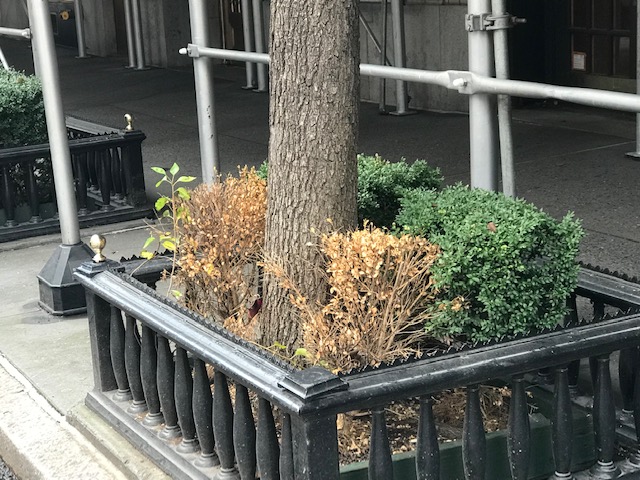
Worse than the twisted, dying bushes were attempts to maintain their shape by installing plastic bushes. Although the fake plants were perfect geometrically, plastic’s past and future’s effect on the planet made these installations incredibly energy depleting (see Lesson XII).



Although plants have been historically symbolic, these symbols, except for a few, died out after the Victorian era. Red roses still mean love, mistletoe gives one permission to own a kiss and the red poppy calls us to remember. Still, for the most part, plants as symbols seem to be a part of the past.
So, what makes a boxwood so “prestigious”? Its leaves have a beautiful pattern based on one of the several leaf arrangements found in nature. Also, because of their density, they are easy to sculpt into topiaries or geometric forms, so they have become incredibly beautiful devices in the gardens of large homes. Versailles is one example. The homes in the Hamptons are the other. Visiting these places can make us want to bring home a symbol of such majesty.
This boxwood vignette brings up one of the most difficult but important concepts in decorating: the problems of patterns getting lost by using symbols.
The Role of the Ego on Visual Perception
Because the ego is not so conditioned, it might not be aware of the moment patterns change. The ego may brag about owning a boxwood, a symbol of elitism. Yet at some point, it becomes an ugly distortion, which is why my neighbor could not understand why morning glories were so easily replaced by “dead brown balls.”


How the Ego Can Change a Pattern to Symbol and Then to a Sign
The tendency to negatively alter patterns came about through changes in historical events and in Western thinking. The story is best told by Jonathan Hale in The Old Way of Seeing. The architect longingly looks back to the time when architecture was created, magically alive and powerful, saying,
“The designers of the past succeeded easily where most today fail because they saw something different when they looked at a building. They saw a pattern in light and shade. When they let pattern guide them, they opened their ability to make forms of rich complexity. The forms they made began to dance.”
Hale reflected that the loss of the old way of seeing has not only jaded us but taken away our joy. We look in vain for old patterns, the kind that emerge from trees, birds and our own life forms. According to Hale,
“In America, we don’t encourage vision. We have lists of things we want, things we expect, things we don’t want; and we have plans for how to get rid of them. We have methodologies for creating the sense of home, the sense of community. But the harder we try, the less we hear the old laughter.”
The loss of the old way of seeing happened almost overnight. According to Hale, there was a major paradigm switch in the 1830s in America when people went from building in patterns to constructing buildings as symbols. It started in the United States with the Greek revival movement when Greek architecture became espoused as the ultimate elegance, evoking greatness and power to buoy America’s sagging self-image.
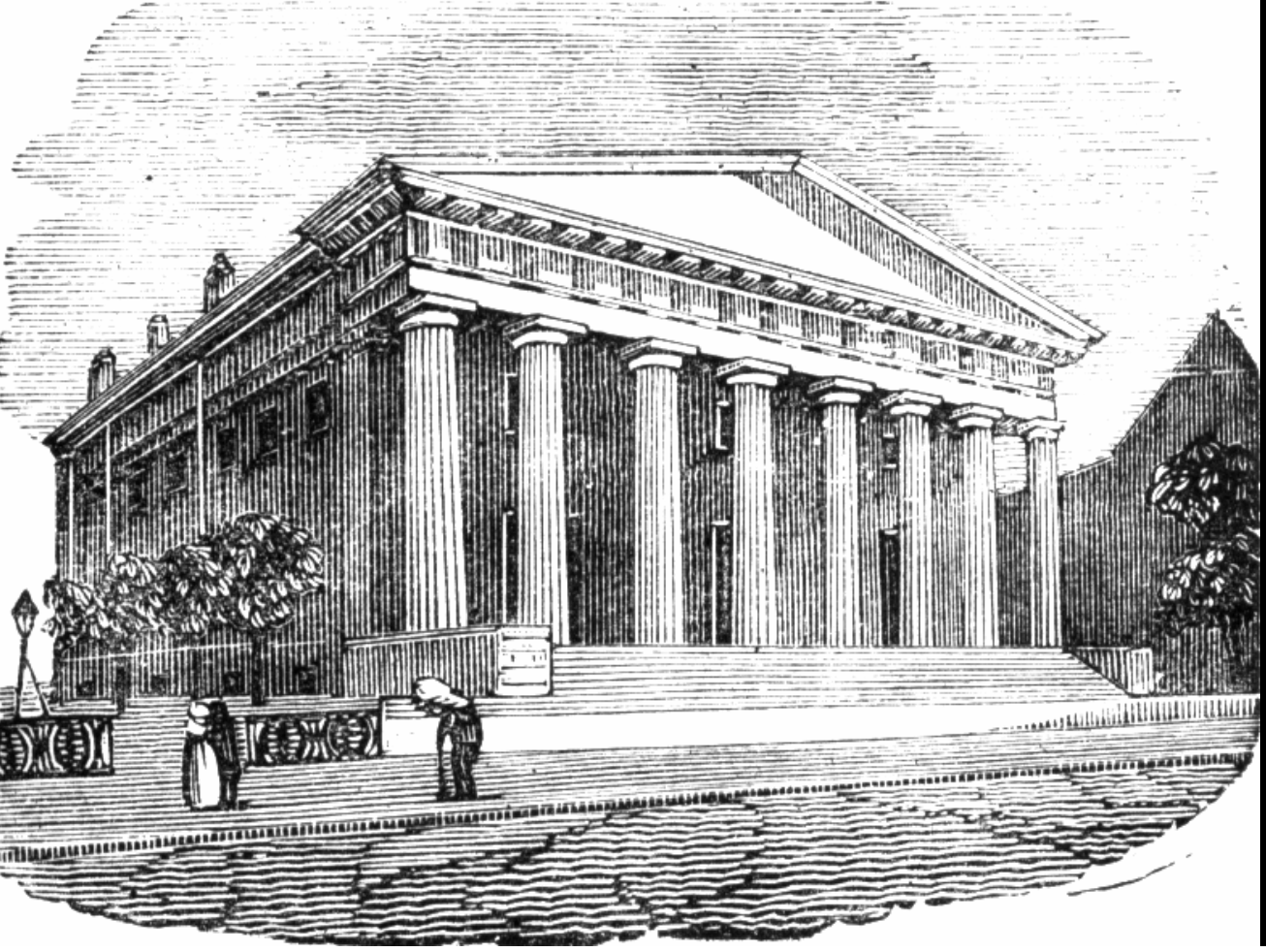
The building that started the craze was the Second Bank of the United States in Philadelphia. From then on, the style spread like wildfire across the country. At first, the architecture was quite beautiful and true to the proportions of the ancient Greeks.
The bank’s intent, though, was ego based. Unlike the ancient Greeks who created to please the eye, the banks wanted to pose a message; in essence, the buildings became symbol driven to appease the national ego. As the Greek Revival movement spread through the United States, builders, in their attempt to present greatness, forgot about patterns and slowly forgot the proportions that made the symbol of the Greek temple powerful. Builders began to think it was just architectural articulations like columns, friezes and pediments that were important, so they slapped them on a rectangular form of any proportion. Ego might have convinced the architect that his building was grand, but for many others, the magic was lost, so he became a victim of misappropriating the symbol as a sign and victimized others through his creation.

Symbols and Patterns in Design
Today when we look at an object, we often do not see the scaffolding, its bones, so to speak. So, when we look at the objects in a beautiful picture in design magazines (known in the industry as shelter books), we immediately overlook the scaffolding and translate it in our mind’s eye as symbols. What we saw and what we thought we saw become two different things. Then when we create what we saw as objects based on symbols, we rarely achieve the same aesthetics found in the design books.
Most good professional designers know the rules of patterns but because these ideas are complicated, you get information in design magazines in little bytes of information. They don’t teach mathematical patterns. This does not give you an overall concept of design. Unless the mind is clear and self-knowing, the patterns of design become symbols based on the erroneous thinking of the mind. Without understanding how to see patterns, however, we can get caught up into symbolism and big mistakes can happen.
In Patterns and Symbols in Decorating, Lesson VII Part B, we will look at one design element, color, for example and examine how color is seen as a symbol and a pattern.
Learning or re-learning to see patterns can be difficult. Who wants to read all this when Wayfair is waiting for us.