When my young niece visited me years ago, we would engage in “clawing,” one of our favorite yearly sports. We would visit the arcades, K-Mart, and supermarkets to try our hand at the claw machines filled with stuffed animals, balls, and assorted toys. Koreans call it “tangjinjaem,” spending small amounts of money to have fun and find joy. When she was younger, we would score eight or ten animals every vacation. As she got older, the bounty grew.
Collecting Things
One year, in a two-week period, she amassed forty-eight plush toys. To celebrate, I photographed her booty in front of the fireplace. She smiled like a successful hunter back from safari. Since we couldn’t stuff all of them in a suitcase, I had them shipped to her in California.
Missing All the Fun
Missing her and our time together, I noticed on the mantelpiece above her photograph the head of a Buddha I had bought in China. “How ironic,” I thought, “the Buddha sitting above all this materialism.”
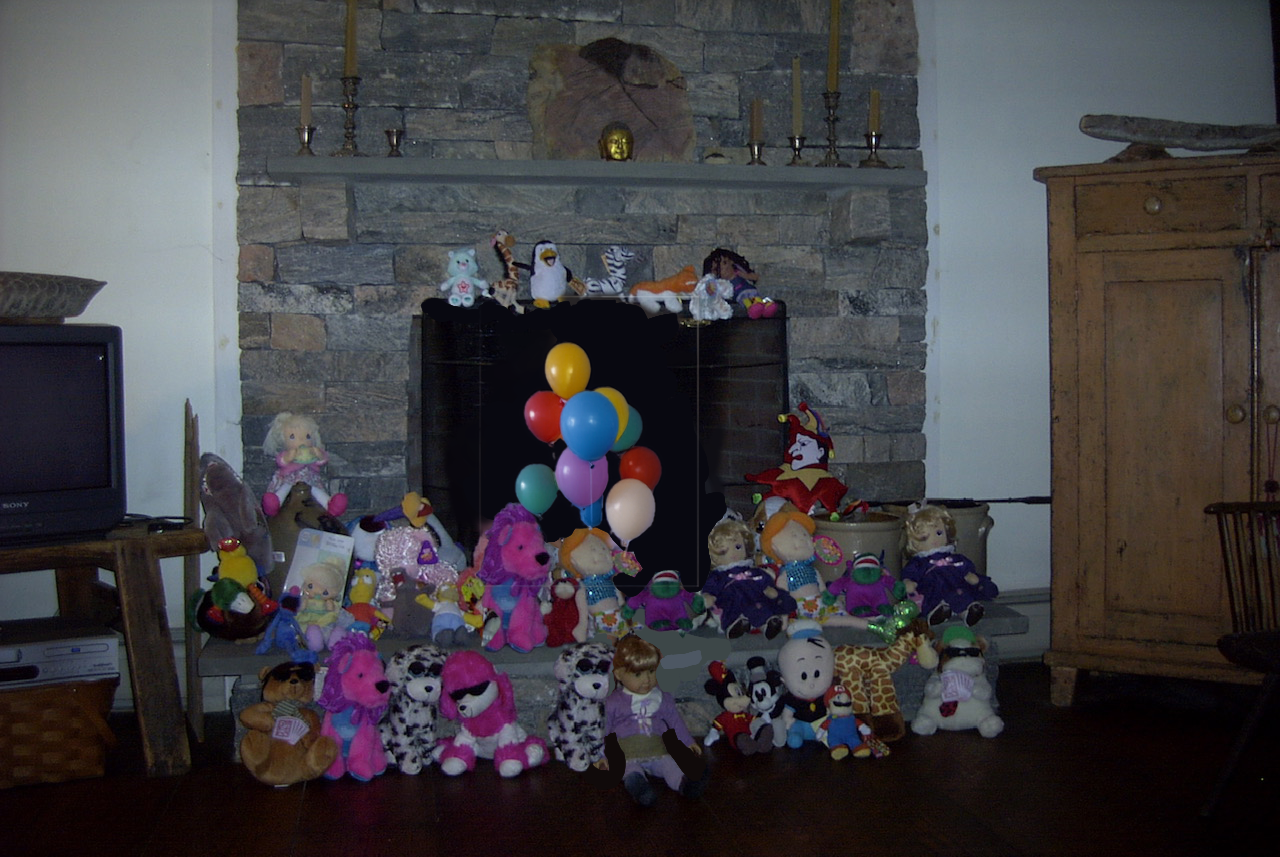
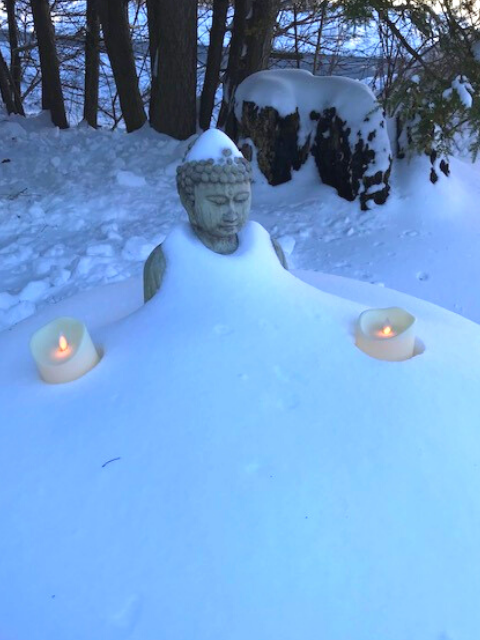
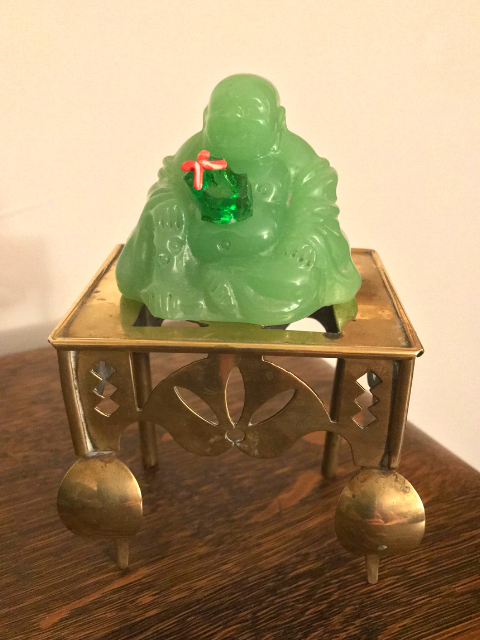
Then I realized I was a collector, too — a Buddha figure collector. At first, I placed them in a few rooms in the country house and city apartment and eventually in every room and the gardens. I even put a small one in my terrarium of carnivorous plants. Friends and family started giving them to me, and like clawing, Buddha-collecting began a quasi-addiction.
Christianity is my religion, not Buddhism. I have a few icons around but don’t collect them — the two-foot statue of St. Anthony I found at the dump, the Infant of Prague from my childhood; the bedazzled sculpture I made of the Black Madonna of Czestochowa, and a mini-statue of St. Anthony beside the Buddha in the terrarium.
The Best Buddha Story
When my granddaughter went to Nepal for her college semester-away, I sent her a Halloween care package to share with her host family and friends. Unfamiliar with the culture of Nepal, I sent no ghosts, scream masks, or Frankenstein motifs. A jack-o-lantern theme seemed safe, so I ran to my favorite NYC toy store, E.A.T., and bought a battery-operated jack-o-lantern. Along with that, I included chocolate, candy corn, caramelized popcorn, orange and black jellybeans, Pez candies in pumpkin dispensers, and hundreds of pumpkin stickers. My granddaughter’s host mother loved the jack-o-lantern lamp, but she had quite a sweet tooth, it turned out. Little of the candy made it to the kids.
******
Nepal lost power frequently, so the jack-o-lantern became the family’s evening illumination. Every time the host used it, she would exclaim, “Bless your American grandmother, bless her, bless her.”
The jack-o-lantern stickers made the biggest hit. The host father put them on his work jacket. The family wallpapered one room with hundreds of smiley-face pumpkin stickers. In that room was a Buddha reverently sitting on an altar-like shelf, and it is an important custom to give him gifts. My granddaughter told me the family placed a slew of pumpkin stickers in the Buddha’s hands!
******
My granddaughter understood my love of Buddha statues and in Nepal happened to live near the Buddha’s birthplace. So, off she went to find a Buddha statue to top my collection.
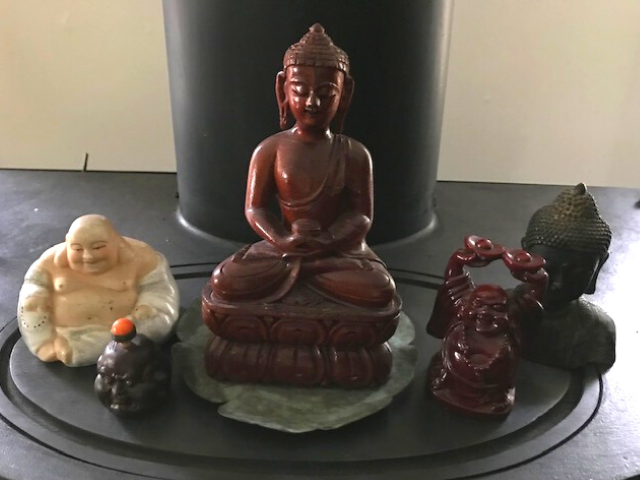
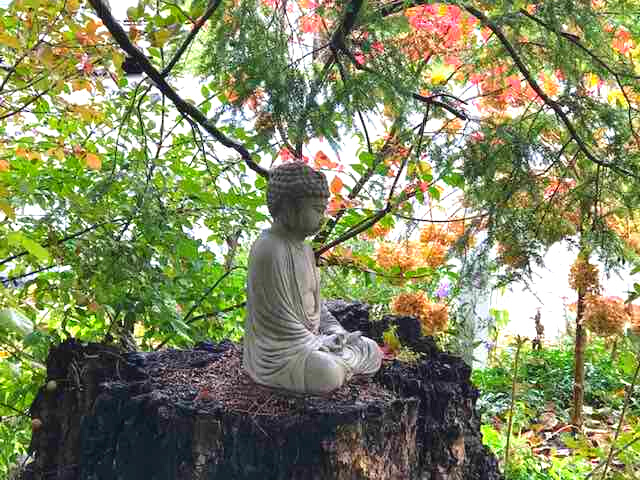
Soon, she found a woodcarver near the Buddha’s birthplace and commissioned the one in this picture. It sits on our wood stove in the country home, the first object everyone sees upon entering. As custom will have it, I fill his hands with flowers, berries and a few pieces of candy corn at Halloween, remembering that thousands of miles away, each member of a family struggling without electricity is lit up from the Buddha within.
Collecting Objects – Why Do I Collect Buddhas?
Why do I collect Buddhas? Every time I pass one, my shoulders drop, my breath slows, I smile and simply calm down.
Now the Buddha is supposed to remind us of impermanence, the opposite of addictive collecting. Yet, when I pass a Buddha, rather than feeling the end is near, I feel full of life.
Most importantly, I don’t feel anything is wrong with amassing a few more. It goes along with one of my theories of metaphysical decorating — that our objects are placed to interact with us. Our energy affects these objects and vice versa. Sometimes we feel nothing or even mild irritation at our things. Sometimes we feel subtle tugs of unprocessed grief, guilt or fears of scarcity. And sometimes we feel love, joy and gratitude when we are near our possessions. We feel energized when they, in turn, send energy back to us.
It is not always materialism that coaxes us to possess things but the reminder of life lessons we learn from — the true nature of having things.
Whenever I pass my Buddhas, I don’t feel the lessons of non-attachment. Just the opposite, I feel hugs.
***
***
There are two parts to this website, The Lessons, which are more difficult in concept, and the blogs, which are lighter in nature.
Two Lessons that relate to this blog are:
XI. Finding Energy Through Our Relationships With Objects
XII. Our Relationship to Objects and the World
Please note that my website allows you to leave comments at the end of the blogs but not at the end of each lesson. If you have a comment or question about a lesson, you may email me at ruta@rutas-rules.com
Dan Levine says
Love the content!